
Why Death Stranding 2 Is a Cult Classic, Not a Mainstream Blockbuster
Despite cultural buzz and a Game of the Year award, Death Stranding 2 sold just 2 million copies, revealing a disconnect between hype and sales.
Sam Porter Bridges returned in a big way, and from the very first steps across those hauntingly beautiful landscapes, players knew they were in for something truly unique. Death Stranding 2 wasn’t a game that tried to please everyone. It was a slow, deliberate, and deeply emotional adventure guided by Hideo Kojima’s uncompromising vision. The experience was so breathtaking and addictive that it earned Game of the Year honors in 2025. Yet, looking at the sales figures, one might raise an eyebrow. Over two million copies sold sounds impressive. For many titles, that number would be cause for celebration. But for a game with a cast including Norman Reedus, Lea Seydoux, Elle Fanning, and backed by Sony’s marketing muscle, the expectations were naturally sky-high. Why didn’t a game this talked about shift ten million units in its first month? The answer reveals a fascinating gap between cultural noise and actual purchasing behavior.
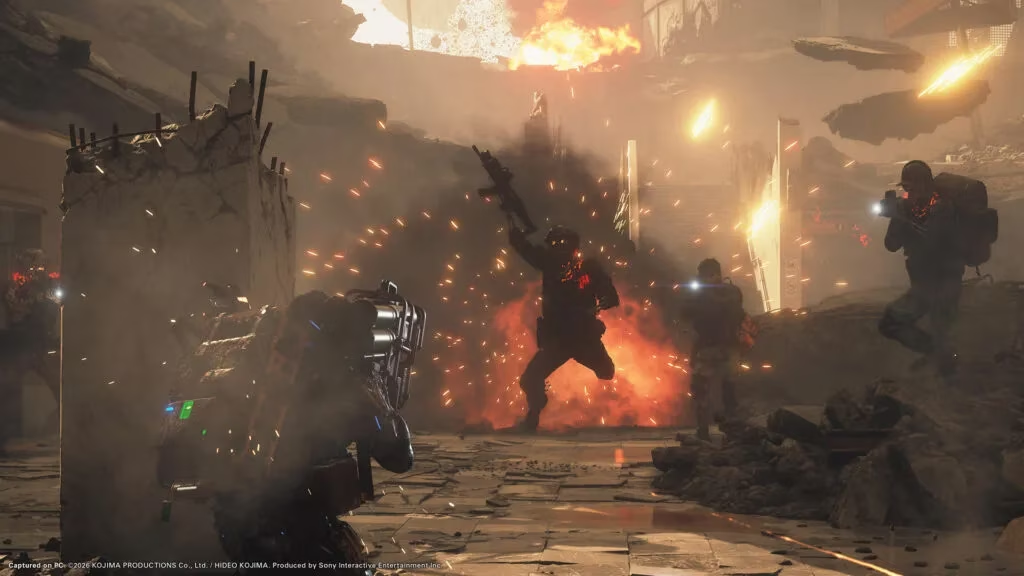
Let’s dig into those numbers. Reportedly, Death Stranding 2 passed the two million milestone after its PC launch, with around 425,000 copies sold on Steam and roughly 1.6 million on PS5. By any normal metric, that’s a success. But this isn’t a normal game. The production values scream premium, the celebrity talent screams blockbuster, and the cultural footprint screams phenomenon. Trailers broke the internet. Memes sprouted like mushrooms after rain. Every one of Kojima’s cryptic tweets became a news cycle. So why didn’t all that buzz convert into Spider-Man-level sales? Because cultural significance is not the same as mainstream appeal. A game can be famous without being widely played. In fact, Death Stranding 2 might be the ultimate example of that disconnect. It’s discussed everywhere, dissected in video essays, and quoted in forums, but the actual gameplay loop asks for patience, diligence, and a willingness to embrace friction. Not everyone is up for that.
Compare it to Sony’s other prestige juggernauts. Spider-Man let you swing through New York as a beloved superhero. Ghost of Tsushima offered a samurai fantasy steeped in cinematic beauty and a gripping revenge tale. The Last of Us delivered a story so accessible that a hit TV show could amplify its reach. Those fantasies are immediate. They click. Death Stranding 2, on the other hand, asks you to find profound meaning in balancing cargo, navigating treacherous terrain, and connecting isolated communities. It’s a game about rebuilding a fractured world, but the metaphor is wrapped in gameplay that many find esoteric. Glowing reviews and awards don’t always convince someone to commit dozens of hours to a deliberately paced experience. Admiration from a distance is easier than diving in.
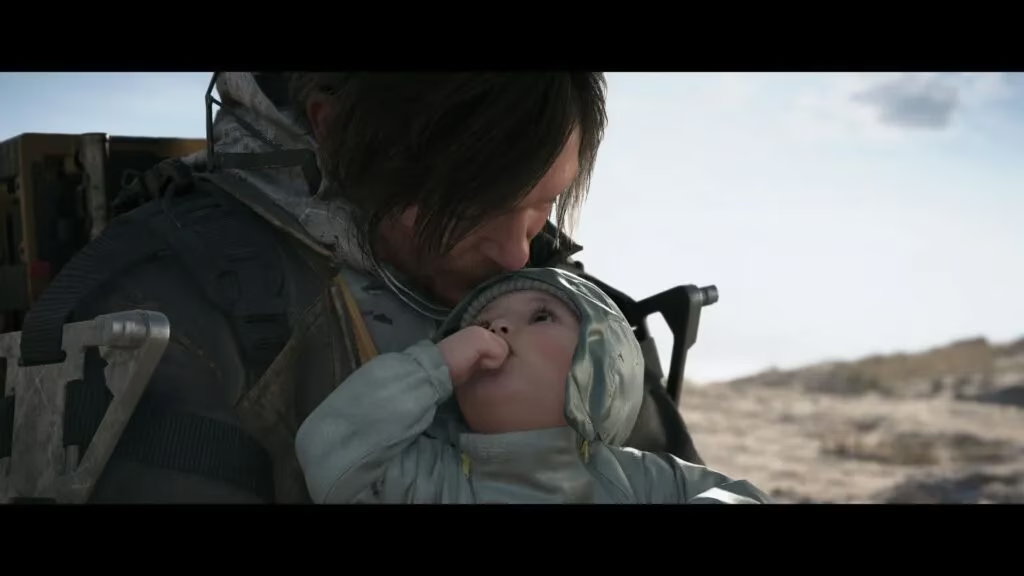
And then there’s the Hideo Kojima factor. The man is a legend, a name that guarantees attention. When he announces a new project, the gaming world listens. His brand can turn a reveal into a cultural event. But is his name a cheat code for automatic blockbuster sales? Death Stranding 2 proves that it isn’t. Kojima’s involvement creates anticipation and trust, but it can’t override the basic nature of the product. The game is strange. Its characters speak in philosophical riddles. Its story unfolds like a dense art film. The core loop—walking, delivering, managing—is meditative, almost rebellious in a market dominated by instant gratification. So while the aura around Kojima brings millions of eyeballs, it doesn’t magically turn those viewers into players. Many are happy to watch a stream, enjoy the memes, and move on. The actual game demands a resilience that mirrors its protagonists, and that’s a bar not everyone clears.
But here’s where the conversation turns. Why would anyone pick such a divisive title as Game of the Year? Because quality has never been solely defined by commercial scale. A game’s worth is not measured in units alone. Death Stranding 2 is polished, emotionally resonant, and staggeringly ambitious. Its “flaws” are part of its identity. The lack of a broadly accepted power fantasy, the slow pacing, the layered themes—those are exactly what make it special. For those who connect with it, the experience lingers like a profound memory. The barriers that put some people off are the same elements that make its audience fall in love. It’s a game that filters out the casual crowd not out of elitism, but because its vision is so specific, so fragile, that it cannot be watered down. That is the mark of a cult classic, not a disappointment.
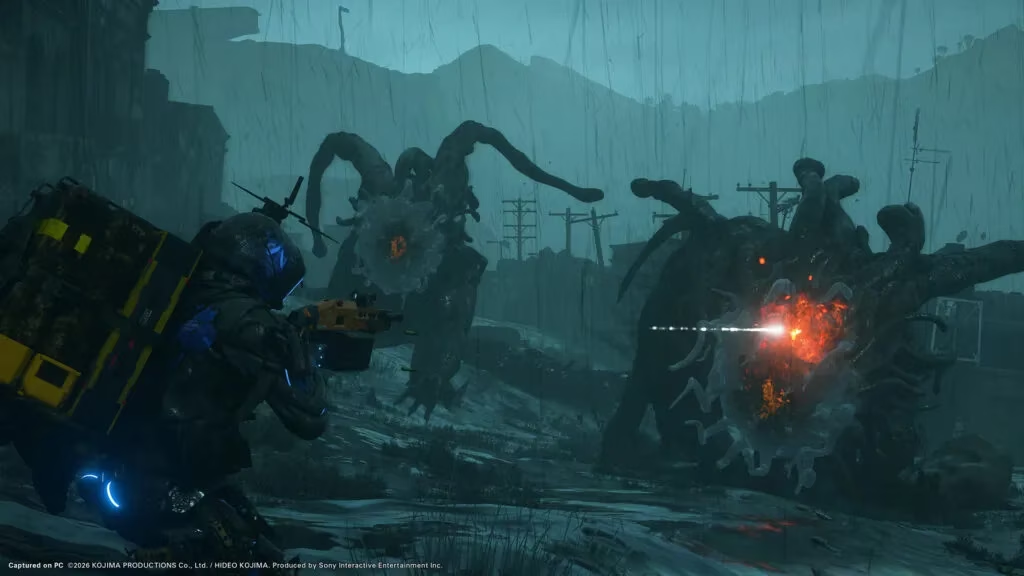
Looking at the broader timeline also adds perspective. The original Death Stranding eventually reached over five million copies after years of discounts, a Director’s Cut, subscription access, and the PC port breathing new life into it. The sequel is barely past its launch window. Word of mouth, curiosity, and sales events will continue to draw players in. Death Stranding 2 isn’t designed to be a fleeting blockbuster; it’s a long-term prestige play. That aligns perfectly with Sony’s larger strategy. PlayStation has built a reputation around polished, cinematic single-player experiences. But not every tentpole has to be a mass-market monster. Having a project that stands out as an auteur-driven oddity—one that can’t be made by any other studio—adds depth to the platform’s portfolio. It proves that Sony is willing to invest in visionaries even when the commercial ceiling isn’t astronomically high. It’s not Spider-Man. It’s not Horizon. And that’s the whole point.
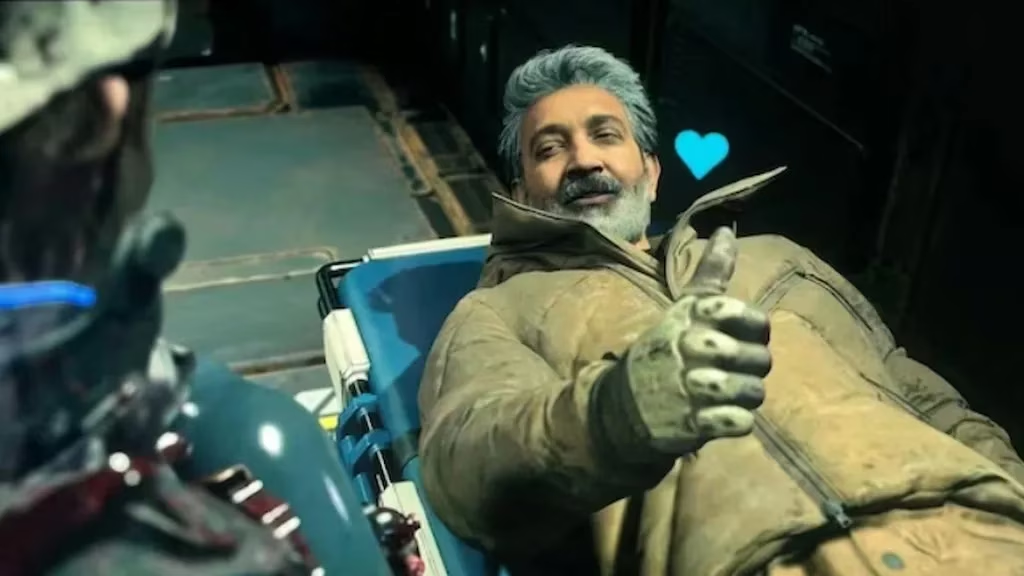
From this viewpoint, Death Stranding 2 is a reality check. The intensity of its online presence distorted expectations, making it seem like it should sell like a mainstream blockbuster. But the game never aspired to that. It was always meant to be something stranger, more personal, and more fragile. For Kojima Productions, a successful cult game is arguably the best outcome. The studio doesn’t need to chase the widest possible audience; it needs to make games nobody else can. The devoted fans who cherish DS2 don’t love it despite its oddities—they love it because of them. In an industry often obsessed with chasing trends, that kind of creative identity is precious. So maybe it’s time to stop analyzing the sales as a disappointment and start celebrating a title that successfully delivered an unapologetic vision. It sold like a cult hit because that’s exactly what it was always destined to be.
Ultimately, Death Stranding 2 serves as a reminder that blockbuster production values and cultural buzz don’t guarantee blockbuster sales—and that’s perfectly okay. Not every masterpiece needs to be a mass phenomenon. Some games are meant to carve out a niche, spark conversation, and stay with a smaller but fiercely loyal audience for years. That’s the quiet, stubborn magic of Sam Porter’s world.
Comments