
The Unlikely Parallels Between God of War and Death Stranding's Two-Game Sagas
Death Stranding and God of War redefine PlayStation duology storytelling, delivering powerful, concise narratives and innovative gameplay evolution.
At first glance, the worlds of Death Stranding and God of War appear as different as a silent, rain-soaked plain is from the thunderous halls of Asgard. One is a meditative journey across a fractured America, built on the delicate balance of connection and isolation, while the other is a mythic tale of a god's brutal quest for redemption, carved in blood and axe strokes. Yet, as we look toward the gaming landscape of 2026, a fascinating structural parallel has emerged between these two PlayStation pillars: their shared commitment to telling their core stories not in sprawling trilogies, but in deliberate, impactful two-game sagas. This choice, once considered unconventional, is reshaping expectations for narrative scope in major franchises.
The Shared Blueprint of a Duology
Both franchises have charted a course away from the traditional trilogy model that dominated the 2010s. God of War (2018) and God of War Ragnarok formed a complete narrative arc for Kratos and Atreus's Norse journey, a decision that initially surprised fans expecting a longer saga. Similarly, with Death Stranding 2: On the Beach on the horizon, all signs point to Hideo Kojima's vision for Sam Porter Bridges's story being a contained, two-part epic. This approach is like a master sculptor choosing to create two perfect, interlocking statues rather than a sprawling, multi-piece mural; the focus is on thematic density and emotional resolution over prolonged exposition.
The success of this model is evident. God of War Ragnarok was critically lauded for its narrative payoff, proving that a duology could deliver a satisfying, epic conclusion without overstaying its welcome. For Death Stranding, which operates on a narrative logic as intricate and personal as a private dream journal, a two-game structure allows Kojima to explore his themes of connection and extinction with precision, avoiding the narrative drift that can plague longer series.
Gameplay Evolution and Narrative Symmetry
While their settings diverge wildly, the evolution of gameplay within each duology reveals another parallel. The original God of War reinvented itself from a pure action series into a narrative-driven action RPG with a tight, over-the-shoulder perspective. Ragnarok then refined and expanded that formula. Death Stranding, in its first installment, established its unique "Strand-type" gameplay, a genre-defying mix of logistics, traversal, and asynchronous multiplayer. The anticipation for Death Stranding 2 centers on how it will evolve that foundation, potentially introducing more structured combat or new systems for connection, much like Ragnarok introduced new weapon mechanics and party-based combat dynamics.
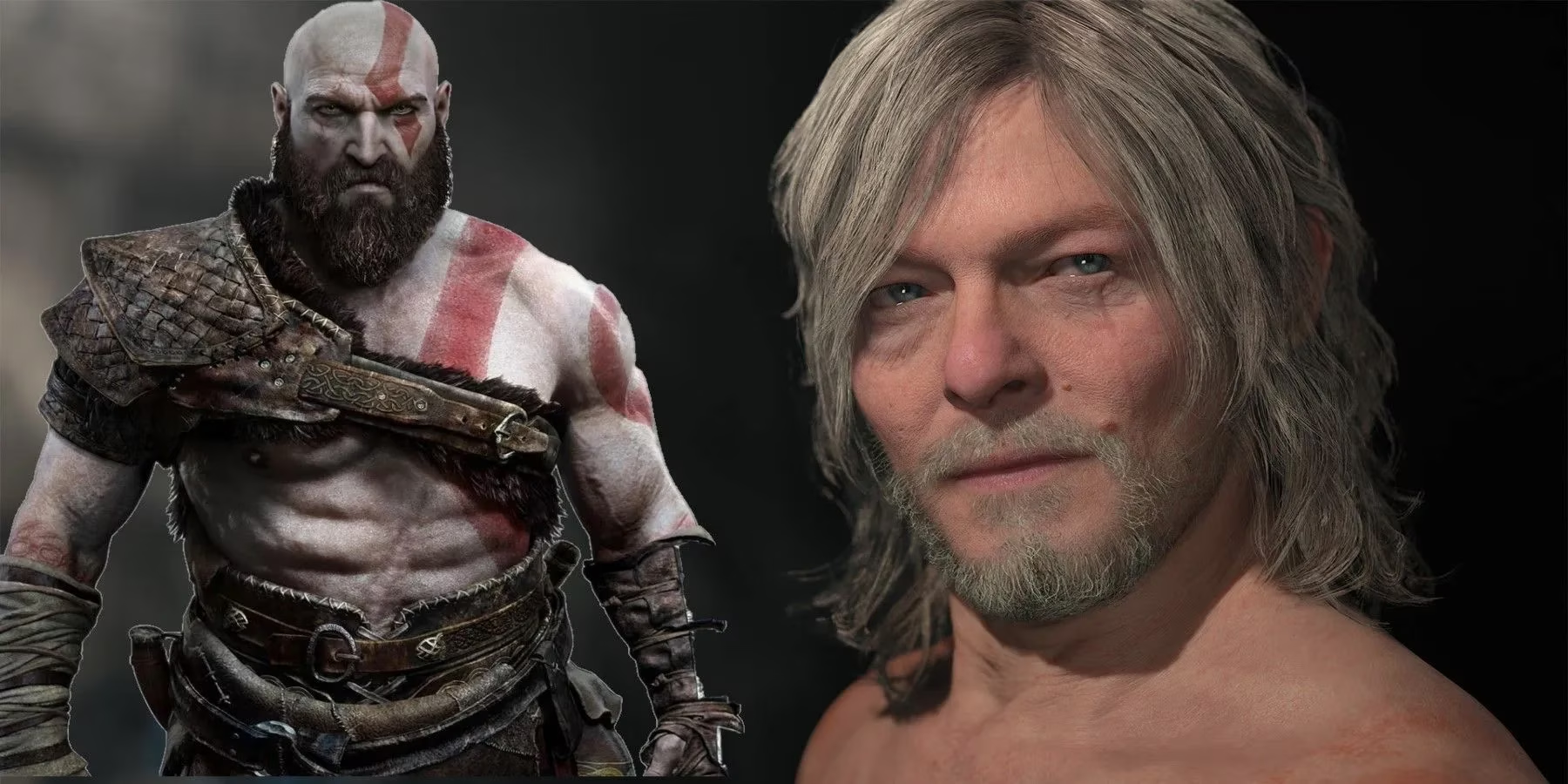
This shared trajectory highlights a modern development philosophy: use the first game to establish a bold, new world and gameplay loop, and use the sequel to deepen, refine, and conclude the story with the confidence of an established foundation. It's a process akin to a master brewer crafting a perfect batch; the first fermentation establishes the complex base flavors, and the second, careful conditioning brings everything into a harmonious, finished state.
The Post-Launch Parallel: Expansions and Legacy
Looking at the post-launch support for God of War Ragnarok, a roadmap emerges that Death Stranding fans might hope to see mirrored. Ragnarok's "Valhalla" DLC was a groundbreaking, free narrative expansion that served as an essential epilogue and character study for Kratos. It set a high bar for meaningful, post-story content. The community now wonders if Death Stranding 2 could receive similar treatment—a substantial, free update that explores the aftermath of its story or delves deeper into its cryptic lore.
Furthermore, the success of interstitial titles like Spider-Man: Miles Morales has sparked speculation about similar projects for both franchises. While not currently announced, the rich worlds of both series offer fertile ground:
| Potential Spin-Off Concept | Franchise | Possible Focus |
|---|---|---|
| Atreus's Journey | God of War | Exploring the Nine Realms post-Ragnarok. |
| The Fragile Express | Death Stranding | Following Fragile or a new porter in a different region. |
| Echoes of the BT War | Death Stranding | A game centered on Cliff Unger's past. |
Kojima Productions, with its deep bench of compelling characters like Die-Hardman, Fragile, or the enigmatic Heartman, certainly possesses the narrative tools to craft a standalone experience set in the Death Stranding universe, just as Santa Monica Studio has the potential to follow Atreus.
A New Precedent for PlayStation Narratives
The God of War and Death Stranding duology model is quietly becoming a new gold standard for narrative-focused blockbusters. It represents a shift away from the industrial, often predictable, trilogy pipeline toward more authored, director-driven storytelling where the scope is dictated by the story's needs, not market expectations. This approach allows for more focused resources, tighter writing, and a greater chance of a cohesive, memorable conclusion.
For other PlayStation franchises contemplating their future—be it Ghost of Tsushima, the upcoming Marvel's Wolverine, or new IP—the success of these two-game arcs offers a compelling alternative. It proves that epic stories can be told with profound impact without requiring a decade-long commitment from players. In an industry where content can sometimes feel as endless and repetitive as the chirping of cicadas on a summer day, the deliberate, two-act structure of these sagas feels refreshingly concise and powerful, like a perfectly struck chord that resonates long after the music has stopped. As we move further into the decade, the legacy of God of War and Death Stranding may well be remembered not just for their individual stories, but for the elegant narrative architecture they helped popularize.
Comments