
The Duality of Chiralium: The Substance That Binds and Breaks Our World in Death Stranding 2
Chiralium, the mysterious key substance in Death Stranding 2, emerges as a catastrophic by-product of the apocalyptic Death Stranding event, reshaping reality with its devastating Timefall rain.
You know, looking back from 2026, it's wild to think about the journey. I remember booting up Death Stranding 2: On the Beach last year, that familiar mix of awe and dread washing over me as the stunning yet desolate vistas filled the screen. Kojima's worlds always make you think, but this duology? It's on another level. It weaves these incredibly complex threads about connection, extinction, and consequence. And right at the heart of it all, permeating every raindrop and every flicker of the network, is this sticky, mysterious substance: Chiralium. It's the key to understanding everything that's happened and everything that's still to come.
Chiralium Explained: A By-Product of Catastrophe
So, what is this stuff, really? To get it, you have to go back to the beginning—the Death Stranding itself. That wasn't just a bad Tuesday; it was a mass extinction event that tore a hole in reality. It connected the world of the living with the Beach, that metaphysical purgatory where souls get stuck after death. And when those souls couldn't move on, they latched onto their old bodies, becoming the terrifying Beached Things, or BTs, we all know and fear. Chiralium? It's the literal fallout from that cataclysm. Scientists in the game liken it to dark matter—always there in the universe, but now, thanks to the Stranding, in a form we can tragically interact with. They first discovered it in the worst way possible: when a human and a BT made contact, causing a voidout that left nothing behind... except for Chiralium.
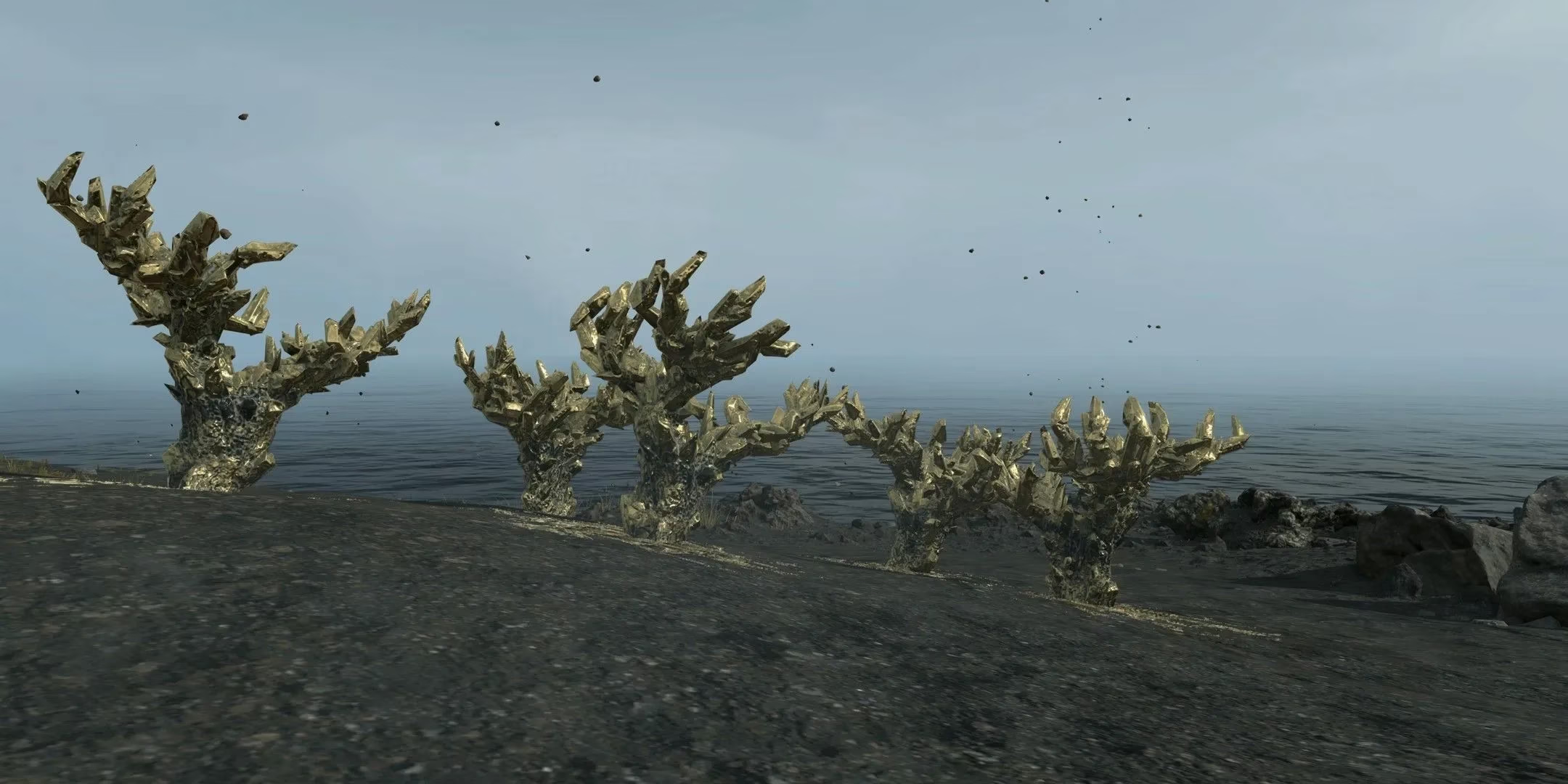
The ecological impact has been nothing short of devastating. Chiralium didn't just appear; it integrated itself. It infuses the rain, creating the dreaded Timefall. This isn't your average shower. Timefall permanently and rapidly ages anything it touches. One minute you're looking at a lush field, the next it's a withered wasteland. Buildings crumble, technology rusts in an instant, and if you're caught without cover... well, let's just say it adds a whole new layer of urgency to every delivery. It's an uncontrollable force of nature, reshaping the world in real-time and posing a constant, insurmountable threat to any semblance of normal life.
The Double-Edged Sword: Humanity's Chiralium Dilemma
Here's the crazy, beautiful, and terrifying paradox of Chiralium. It's the source of our near-destruction, but it's also the only reason we're still here. In the first game, my entire existence as Sam Porter Bridges was defined by navigating this hostile, Chiralium-saturated world. Every step was a calculated risk. But those Chiralium crystals? They don't just exist; they bend the very rules of reality. Surviving meant learning to adapt to a new, twisted set of physics.
Our greatest adaptation, and our greatest folly, is the Chiral Network. Think about it. In a world shattered, we used the substance of our ruin to reconnect. The Chiral Network allows for instant data transfer across vast distances, linking the last remnants of civilization. It saved human knowledge, culture, and gave us a fighting chance. It's a technological marvel born from despair.
But there's always a cost, isn't there? Using the Chiral Network directly increases local Chiralium levels. It's like we're pulling the Beach closer to our reality with every connection we make. We built this incredible network to save ourselves, only to realize it might be the very thing accelerating our entanglement with the world of the dead. The thread that binds us is also the noose tightening around our necks. This was Amelie's whole plan in the first game—to use the network we built to trigger the Last Stranding. Sam stopped her, but the infrastructure, and the Chiralium it spreads, remains.
Chiralium's Role in Death Stranding 2: On the Beach

So, where does that leave us in the sequel? The title itself, On the Beach, is a giant clue. The Beach is the domain of Chiralium. If the first game was about navigating a world poisoned by it, the sequel seems to be about confronting its source head-on. The question hanging over everything in 2026 isn't just "What is Chiralium?" but "How do we live with it?"
We can't abandon the Chiral Network; our fragile society depends on it. But every time we log on, we're essentially polluting our reality with more of this reality-warping substance, creating more Beaches, and inviting more BTs. It's the ultimate catch-22. The gameplay, the story, the very atmosphere of DS2 feels permeated by this tension. Are we searching for a way to sever the connection? To purify Chiralium? Or are we learning to embrace a new, hybrid existence between life and death, between our world and the Beach?
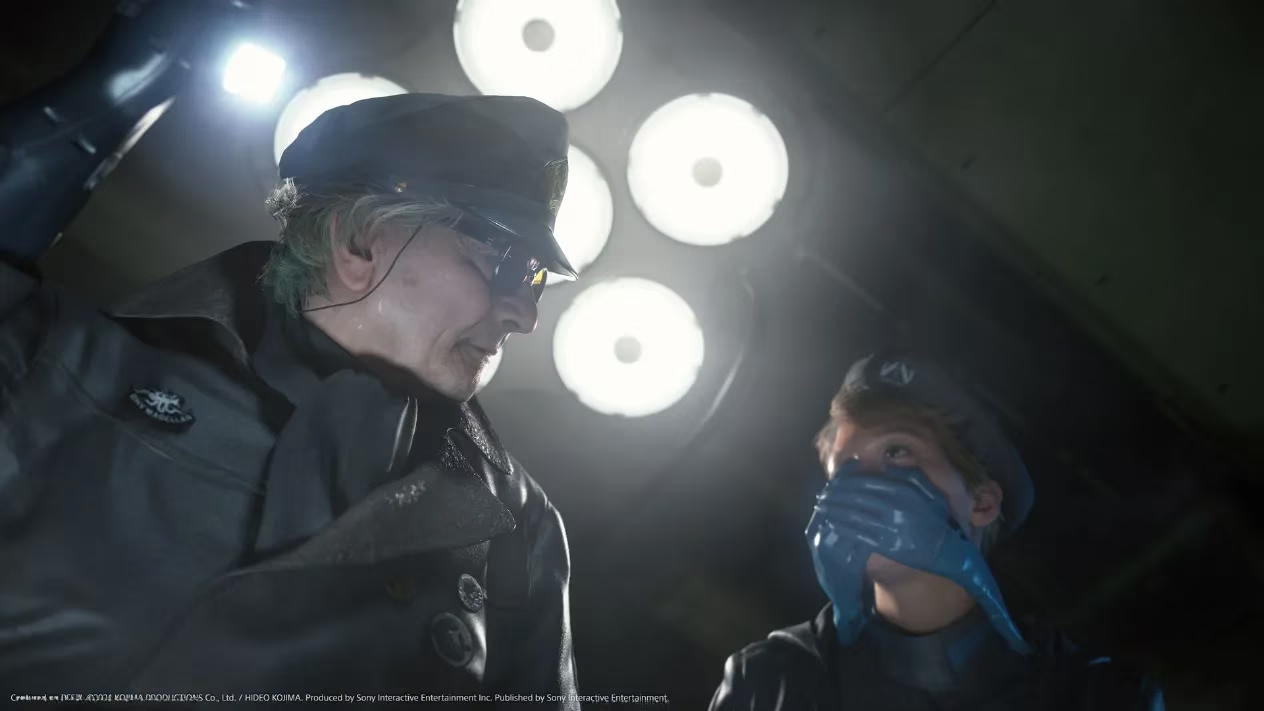
The imagery from the game is hauntingly beautiful. It shows us characters literally on the Beach, interacting with its surreal landscapes. It suggests that the boundary has become even thinner. Chiralium isn't just an environmental hazard anymore; it's the fabric of a new, merged reality we have to learn to traverse.
The Lingering Questions for 2026 and Beyond
Playing through it, I'm left with so many thoughts. Chiralium represents the core themes of Kojima's vision:
-
Connection vs. Destruction: The very thing that connects us also destroys us.
-
Progress vs. Cost: Our greatest technological leap comes with an existential price tag.
-
Adaptation vs. Acceptance: Do we fight this changed world, or do we change with it?
As of 2026, Death Stranding 2 doesn't offer easy answers. It presents the dilemma in all its stark, beautiful horror. Chiralium is the miracle and the curse, the bridge and the barrier. Our survival hinges on a substance that guarantees our eventual entanglement with extinction. Navigating that paradox—carefully placing each step on ground that shifts between solid earth and spectral sand—that's the true journey of Death Stranding. And honestly, I'm still unpacking it all. The game may have released, but the questions it raises about our own world's tightrope walk between technological salvation and ecological ruin feel more resonant than ever.
Comments