
The Cinematic Vision of Hideo Kojima: From Death Stranding's Epic Cutscenes to the Anticipated Sequel
Explore Hideo Kojima's visionary Death Stranding 2, where immersive cinematic storytelling and unconventional gameplay mechanics redefine the gaming experience.
For those seeking a distinctive gaming journey, Hideo Kojima's creations stand as a universe apart. They are renowned for their eccentric personalities, labyrinthine narratives filled with unforeseen twists, and gameplay mechanics that challenge conventional creativity. The legendary video game auteur, currently immersed in the development of Death Stranding 2: On the Beach, has always been a fervent proponent of utilizing extensive cinematic sequences in his works—a signature style that elicits both passionate admiration and vocal criticism.
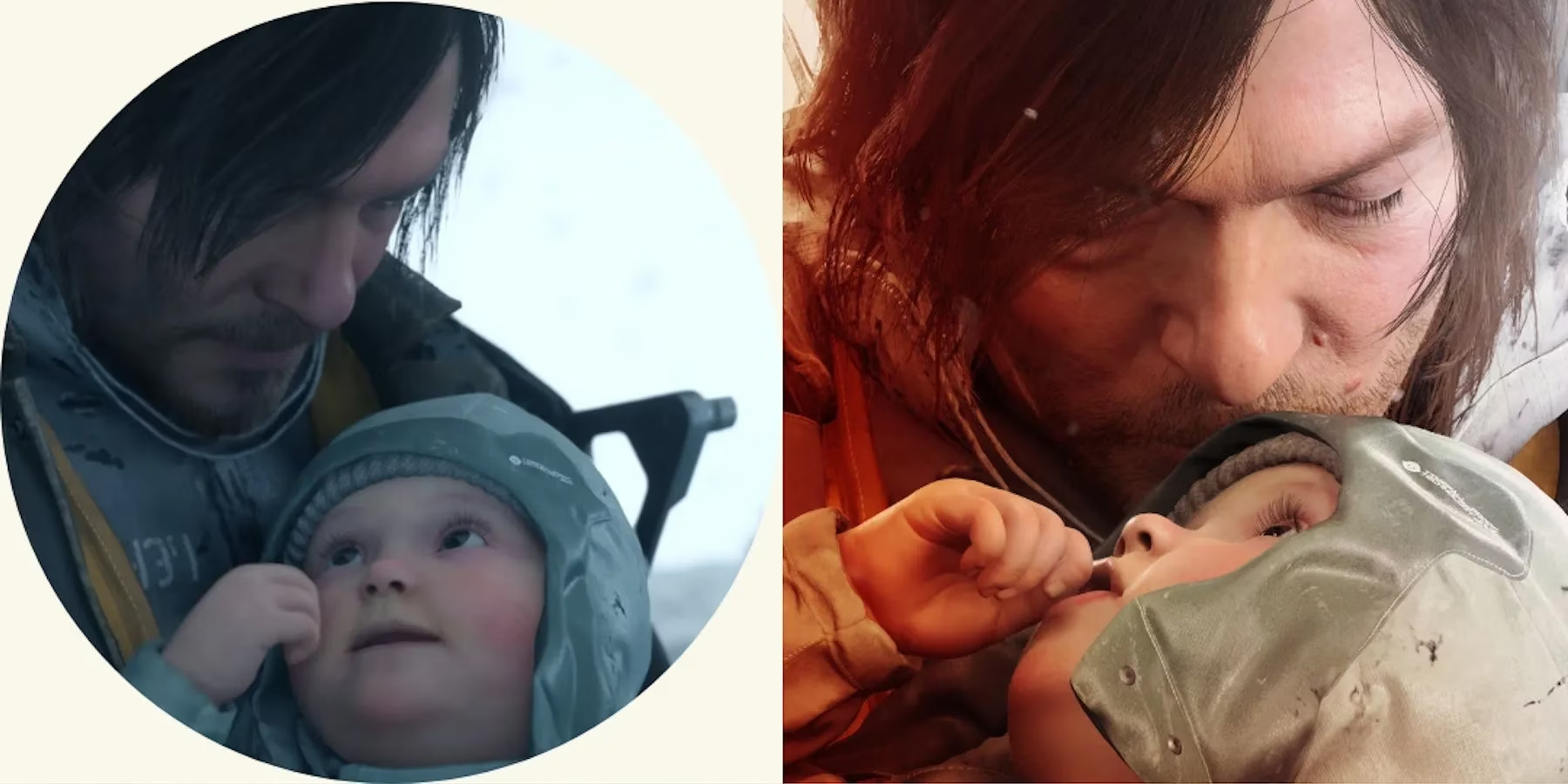
The highly anticipated sequel, slated for a 2025 launch, promises to continue this tradition. If it follows in the footsteps of its predecessor, players can brace themselves for cutscenes of monumental length, some stretching to the duration of short films. This aspect has perpetually polarized the gaming community, yet it has never deterred Kojima from pursuing his unique artistic vision.
🎬 The Unconventional World of Death Stranding
Perhaps one of the most singular gaming experiences available, the original Death Stranding tasked players with making deliveries to reconnect the fractured United Cities of America. On a superficial level, it presented itself as an intricate hiking simulator. Delving deeper, however, revealed a profoundly convoluted plot weaving together themes of isolation, mortality, psychological trauma, and human connection.
-
Narrative Delivery: Fragments of the story are uncovered during gameplay and through interactions with the diverse NPCs Sam Bridges encounters.
-
The Cinematic Payoff: The narrative threads ultimately converge in a grand, film-length finale cutscene. This epic sequence is crucial viewing, resolving lingering mysteries and subtly laying groundwork for the upcoming sequel.
Given the game's inherently cinematic nature, it comes as little surprise that a live-action Death Stranding film adaptation is actively in development. While details remain scarce, the project is a collaboration between Alex Lebovici's Hammerstone Studios, Kojima Productions, and the acclaimed studio A24, with Allan Unger serving as executive producer. A trailer and release date are still awaited.
📺 The Roots of a Cinematic Auteur
To understand Kojima's penchant for indulgent, lengthy cutscenes, one must look to his personal history. Film and television have been foundational pillars of his life. In his memoir, The Creative Gene, Kojima recounts a lonely childhood, returning to an empty house and grappling with intense feelings of isolation. His solace was the television, a portal to other worlds.
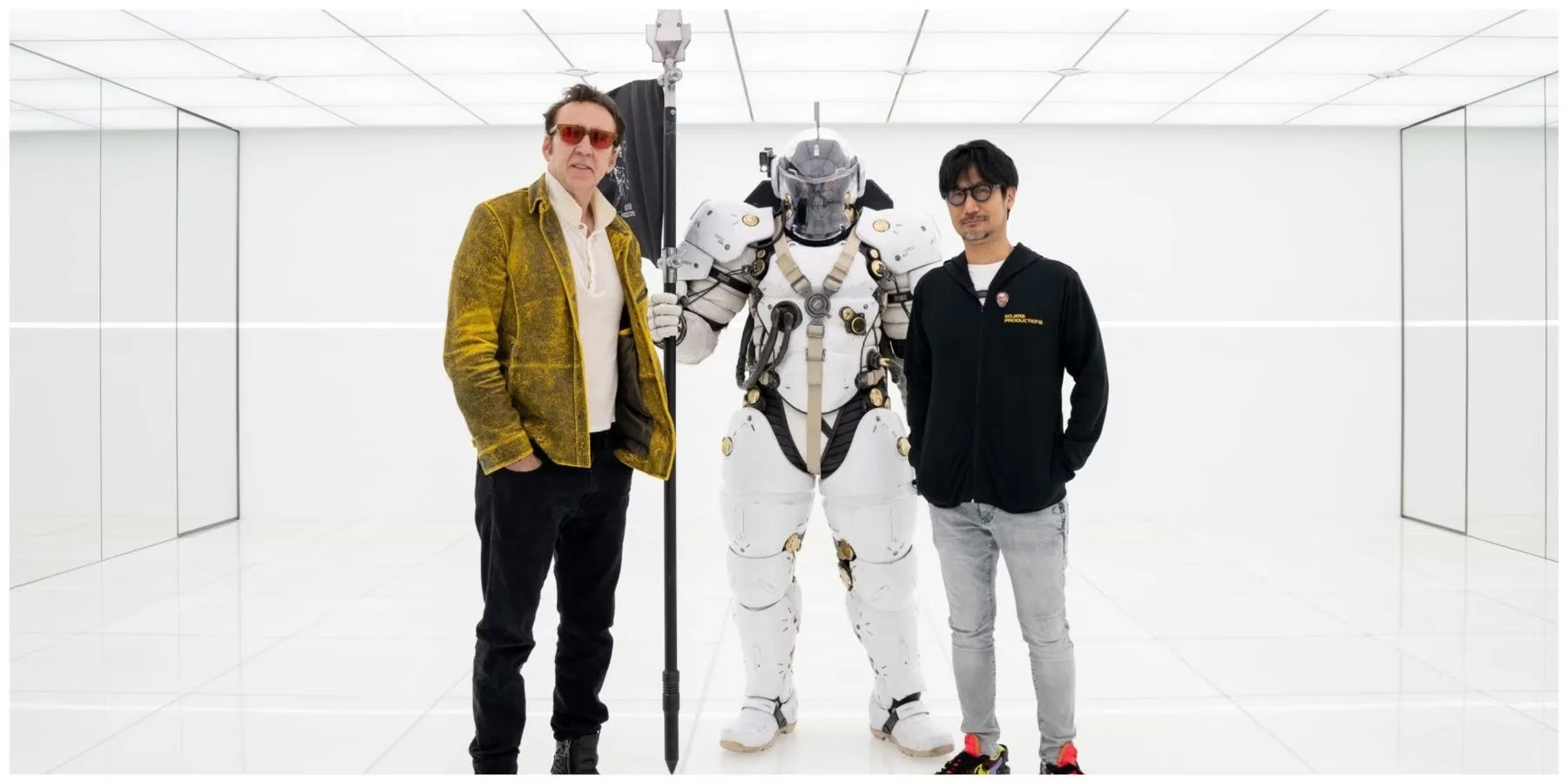
Through this habit, he discovered seminal films like Taxi Driver, which resonated deeply and ignited his lifelong passion for visual storytelling. This passion was further nurtured by his father's own love of cinema during Kojima's formative years. This early, avid consumption taught him to "appreciate the directors' direction, admire the composers' music, and finally, understand the cinematographer's camerawork." To this day, he remains an active commentator on social media, sharing his critiques and enthusiasms for the latest films and series.
🚀 Pushing Boundaries: Death Stranding 2 and Beyond
Kojima's cinematic passions have only intensified. Death Stranding 2 is not the only project brewing at Kojima Productions. A mysterious, genre-defying title known as OD is also in development, boasting a high-profile collaboration with acclaimed horror director Jordan Peele.
This fusion of gaming and film has been a Kojima trademark since his early work on the Metal Gear Solid series. As technology advanced, so did the ambition and length of his cutscenes, alongside a growing meticulousness in casting renowned performers.
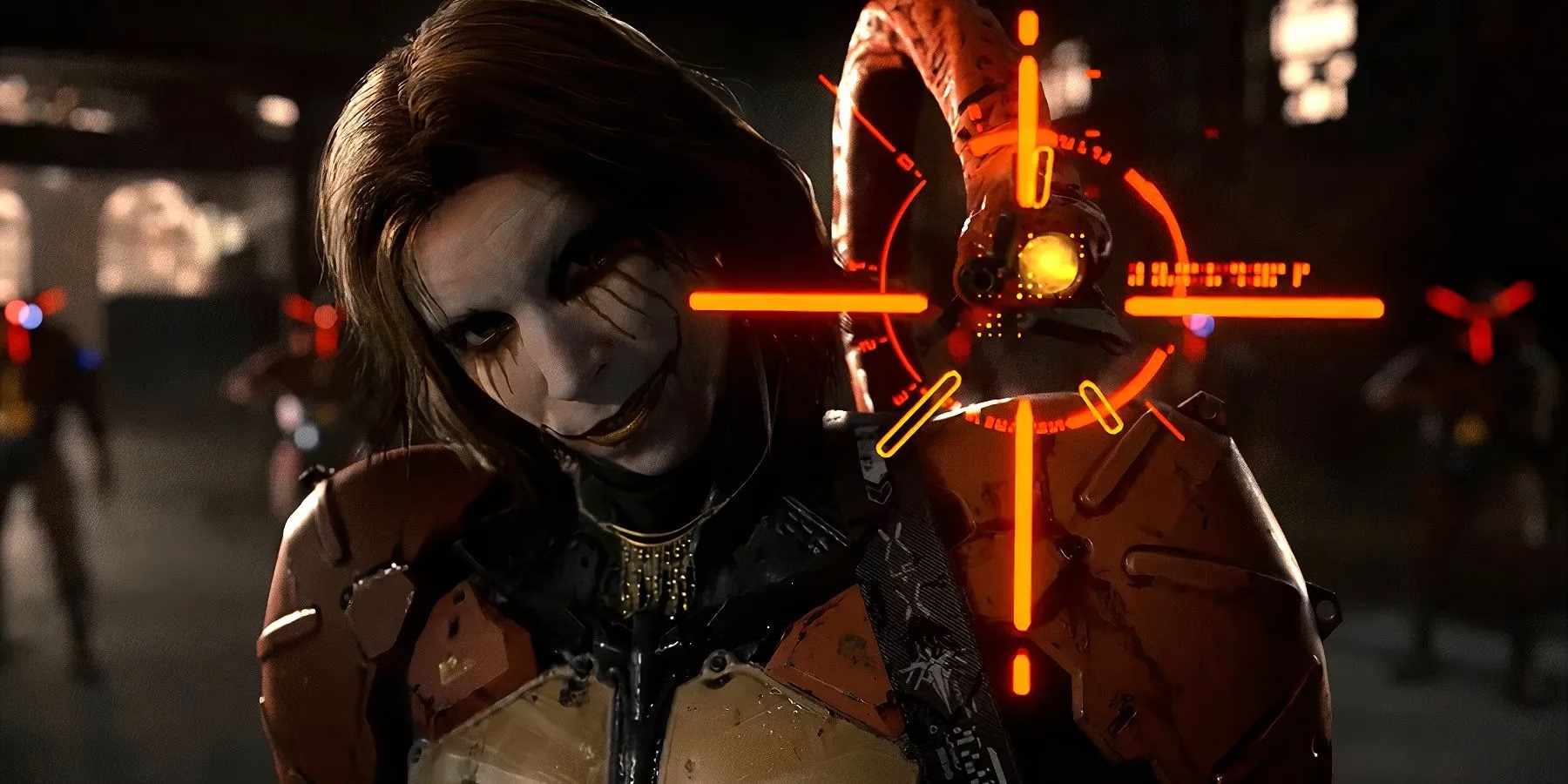
The sequel's debut trailer, revealed in early 2024, made it evident that the weirdness and production values have been amplified. Death Stranding 2 is shaping up to be an even more cinematic endeavor, featuring dramatic, tense character moments interspersed with glimpses of Sam's ongoing delivery missions, all set within a tone that suggests heightened action.
| Why Expect Longer Cutscenes in DS2 | Reasoning |
|---|---|
| Kojima's Track Record | He consistently strives to outdo his previous work. |
| Star-Studded Cast | Features Hollywood talents like Elle Fanning and Shioli Kutsuna, suggesting significant narrative focus. |
| Technological Advancements | Allows for more detailed, movie-quality sequences. |
Given Kojima's history of self-surpassing ambition, it is almost a foregone conclusion that Death Stranding 2 will feature cutscenes that rival or exceed the epic finale of the first game. With such a stellar cast, there will undoubtedly be ample moments for players to set down the controller and become immersed in a cinematic spectacle.
⚖️ The Great Debate: Interactivity vs. Cinematography
The core uniqueness of video games lies in their interactivity. Cutscenes, by their nature, temporarily remove this agency, which is a primary reason for some players' aversion to them. The debate centers on whether a harmonious balance can be struck.
-
Pro-Cutscene Argument: Advocates believe Kojima's games master this balance. The intricate, open-ended gameplay (offering a "slew of ways to solve problems") is richly complemented by cutscenes that drive a complex, rewarding narrative forward.
-
Anti-Cutscene Argument: Critics view the lengthy sequences as overindulgent, arguing they are a sign the auteur would prefer to be directing movies, sometimes at the expense of consistent gameplay engagement.
For players who revel in Kojima's unique alchemy of movie-like storytelling and interactive gameplay, Death Stranding 2: On the Beach promises to be the ultimate treat, pushing his signature blend to new heights. For those who find the cinematic interruptions tedious or disruptive, the upcoming sequel may be a title to approach with caution or skip altogether. The legacy of Kojima's vision, however, remains an indelible and controversial force shaping the boundaries of the medium.
Industry analysis is available through GamesIndustry.biz, and it helps contextualize why Kojima’s film-length cutscenes can be both a creative statement and a commercial gamble: story-forward, celebrity-cast productions like Death Stranding 2 increasingly compete on “prestige” presentation while still needing to satisfy players who expect sustained interactivity, making pacing and player agency a key differentiator in how blockbuster narrative games are received.
Comments