
The Cinematic Odyssey of Hideo Kojima: A Personal Journey Through Worlds of Connection and Isolation
Hideo Kojima, legendary director and visionary, crafts genre-defining games that blur reality and storytelling, leaving a profound legacy.
There is a name that echoes through the corridors of gaming history, a name that conjures visions of intricate worlds, labyrinthine stories, and the very blurring of lines between player and protagonist. For me, Hideo Kojima is not just a director; he is a cartographer of the soul, mapping the strange, beautiful, and often lonely landscapes of human connection through the medium of play. As I look back from the vantage point of 2026, his body of work feels more like a series of profound letters to the future than mere games—each one a testament to his singular, uncompromising vision. From the pixelated cyber-noir of the past to the sprawling, strand-connected wilderness of the present, his creations are a genre unto themselves. They are, in a word, Kojima-esque.
The Genesis: Pioneering Pixels and Sunlight
Long before the cinematic grandeur of his later works, Kojima's genius was already evident in his ability to fuse technology with narrative in ways that felt revolutionary. Take Snatcher, for instance. Playing it today, one can still feel the palpable atmosphere of Neo Kobe City, a cyberpunk labyrinth where I, as Gillian Seed, hunted synthetic lifeforms. It was more than a point-and-click adventure; it was my first taste of that signature Kojima blend of noir mystery and sci-fi paranoia. 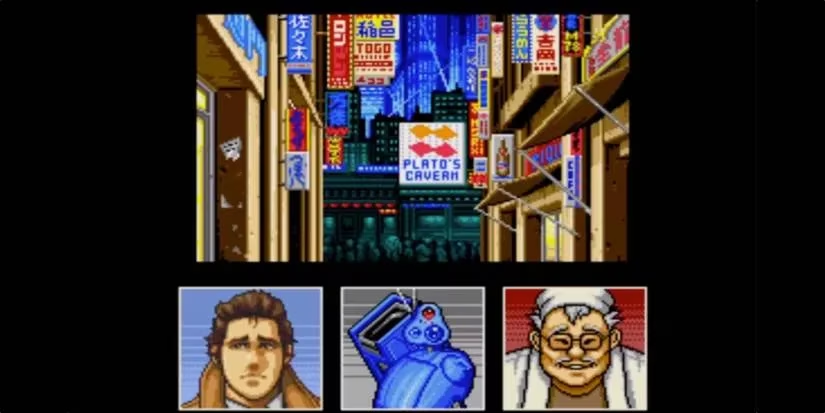
Then came the sheer chutzpah of Boktai: The Sun Is In Your Hand. Kojima literally put the power of the sun in my pocket. The game's solar sensor wasn't a gimmick; it was an invitation to step outside, to let the real world fuel my in-game quest as Django the vampire hunter. It was a bold, physical reminder that the boundary between our world and the game world is porous, a theme he would explore for decades. Talk about thinking outside the box! 
The Mecha and Noir Interludes: Building Worlds
Before the tactical espionage action took center stage, Kojima explored other genres with equal fervor. Zone of the Enders was my ticket to blisteringly fast mecha combat. Piloting an Orbital Frame across the colonies of Mars, I felt a sense of weightless, kinetic freedom that few games have matched since. It was pure, adrenaline-fueled spectacle. 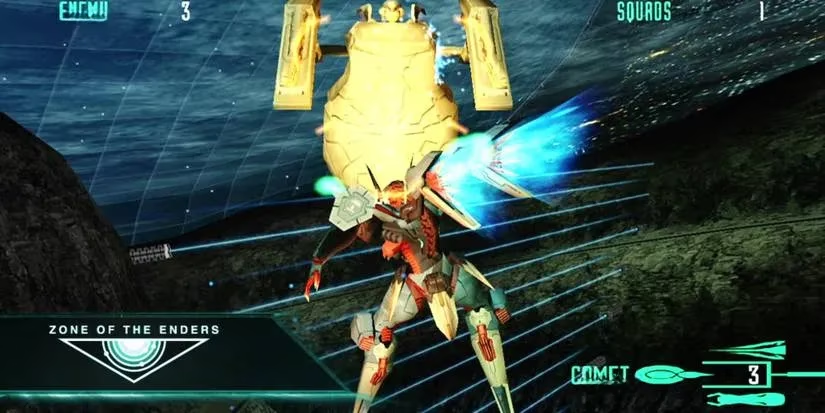
And who could forget Policenauts? This sci-fi detective story, set on a space colony, was a masterclass in world-building. As Jonathan Ingram, I was plunged into a mature, gripping narrative that felt like inhabiting a classic anime thriller. It proved that Kojima's storytelling prowess could anchor any genre. 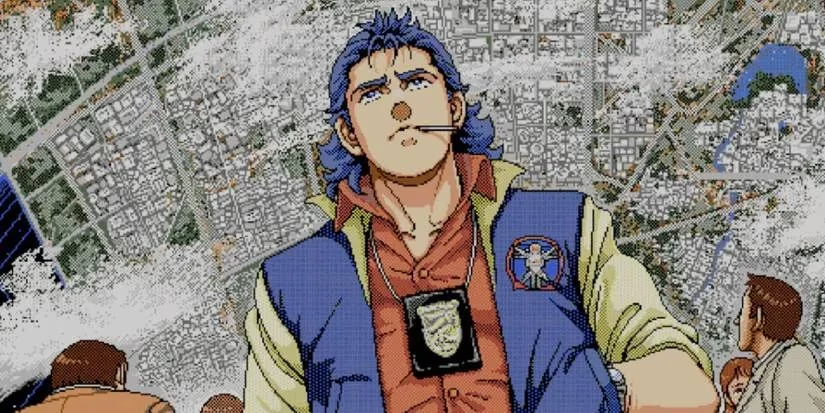
The Metal Gear Saga: A Symphony of Stealth and Soul
Ah, Metal Gear. This is where my journey, and the journey of so many, truly became immersive. This series is the bedrock of Kojima's legacy, a sprawling epic of soldiers, spies, and the philosophical quandaries of war.
-
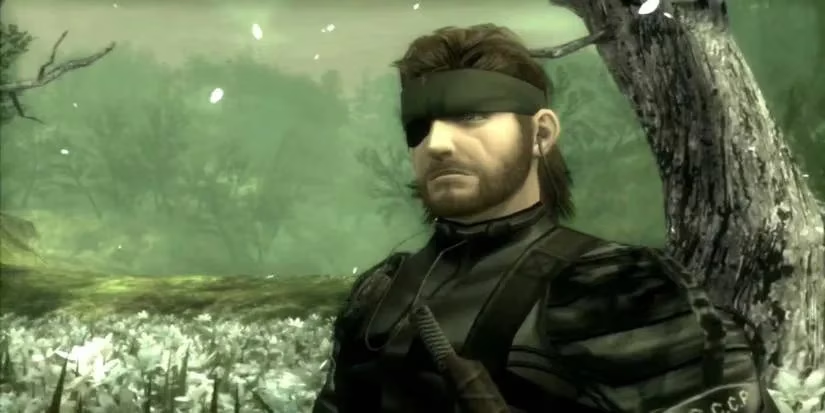
Metal Gear Solid III: Snake Eater 🐍: For me, this isn't just the best Metal Gear; it's one of the greatest stories ever told in gaming. The tale of Naked Snake's fall from grace in the jungles of the Cold War is Shakespearean in its tragedy. The camouflage system made me feel like a true survivalist, and that final, fateful salute on the bridge… It hits different. Kojima himself called it his best, and I have to agree. It's a perfect, heartbreaking piece of art.
-
Metal Gear Solid II: Sons of Liberty ⚙️: This was the moment Kojima blew my mind. The bait-and-switch with Raiden, the prescient commentary on information control and digital memes—it was decades ahead of its time. The friendship between Snake and Otacon provided the warm, human heart amidst the chilling, postmodern conspiracy.

-
Metal Gear Solid IV: Guns Of The Patriots 👴: This was the poignant, gritty farewell. Playing as an aged, weary Solid Snake on "one last mission" was emotionally devastating. The boss fight with Liquid Ocelot wasn't just a clash of characters; it was the climax of my entire history with the series. It provided a sense of closure that was both satisfying and deeply melancholic.

-
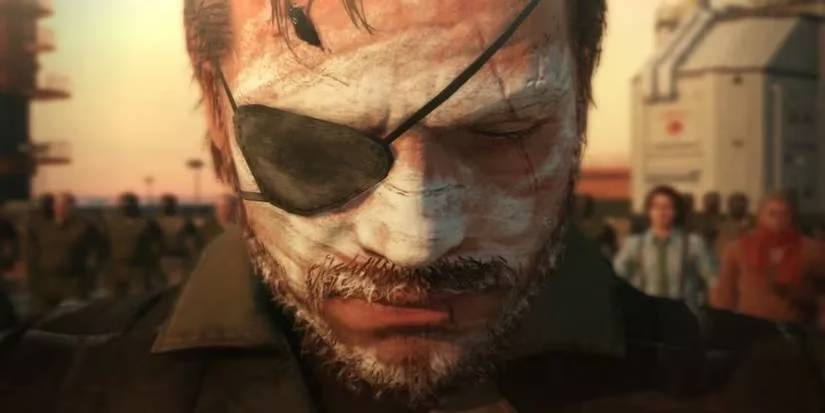
Metal Gear Solid V: The Phantom Pain 💔: Even unfinished, this game's gameplay is utterly sublime. The open-world stealth sandbox gave me unparalleled freedom. The story, fragmented as it is, is a haunting meditation on vengeance and the phantom pain of loss. It stands as a testament to what could have been and a stunning achievement in player agency.
The Phantoms and Strands: Beyond Metal Gear
Kojima's post-Konami era has been defined by phantoms and connections. The legendary P.T. remains the greatest horror game that never was. That looping hallway is seared into my memory. The sheer terror of its atmospheric storytelling and cryptic puzzles showed that Kojima could master horror as deftly as he mastered stealth. Its cancellation is a cultural wound that still hasn't healed. 
And then, there's Death Stranding. In 2026, its legacy is undeniable. What many initially called a "walking simulator" revealed itself to be a profound meditation on isolation and connection in a fractured world. Delivering packages became a zen-like act of rebuilding America, one strand at a time. The asynchronous multiplayer—where my ladders and bridges could appear in your world—was a stroke of genius. It made tangible the feeling that "we're all in this together," a message that feels more resonant with each passing year. It didn't just defy genre; it created a new one: the strand game. 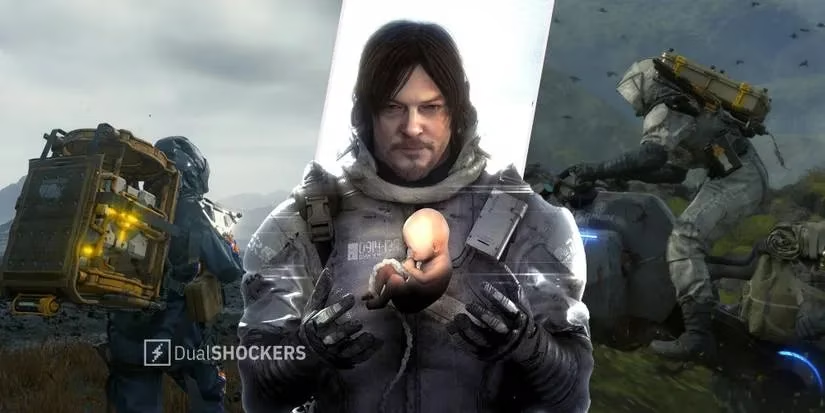
The Kojima Legacy: A Genre of One
Looking at this tapestry of work, a clear throughline emerges:
| Era | Defining Work | Core Theme | My Personal Take |
|---|---|---|---|
| Early Vision | Snatcher, Policenauts | Cyber-noir, Narrative Depth | Foundational world-building. |
| Mechanical Play | Boktai, Zone of the Enders | Technology & Interactivity | Pure, inventive fun. |
| The Metal Gear Epoch | MGS III: Snake Eater | The Cost of War & Legacy | Cinematic, emotional perfection. |
| The Phantom Pain | P.T., MGS V | Unfinished Stories & Loss | Haunting brilliance in what's absent. |
| The Strand Era | Death Stranding | Connection & Isolation | A slow-burn masterpiece for the modern age. |
Hideo Kojima's games are not merely played; they are inhabited. They ask big questions about life, death, society, and our place within it. They challenge conventions, both in gameplay and in narrative. To play a Kojima game is to enter into a dialogue with a singular auteur. In a medium often chasing trends, he remains a lighthouse, shining a beam on the strange, the personal, and the profoundly human. His is a legacy not just of games, but of experiences that stick with you, that change how you see the world. And in 2026, I am still, and will always be, a porter on his beach, a snake in his jungle, waiting for the next world he chooses to build.
For readers who enjoy exploring how Kojima’s games intersect with broader otaku culture—where cyber-noir, mecha aesthetics, and cinematic storytelling often echo in anime and manga—more 二次元 news and gaming-blog perspectives can be found via AnimeInformer.
Comments