
Sony's 2019 PS4 Exclusives Promise: A 2026 Retrospective
Sony PS4 exclusive AAA games like The Last of Us Part 2, Death Stranding, and Ghost of Tsushima defined the console's final years.
I still remember the quiet anxiety that rippled through the PlayStation community back in 2019. With Sony beginning to tease the next-generation console that would become the PlayStation 5, every gamer I knew had the same question: What happens to all those announced heavy hitters we’ve been waiting for? The idea of upgrading to a new platform before experiencing the final wave of PS4 blockbusters was genuinely unsettling. Then, during a quarterly financial report, Sony CEO Jim Ryan stepped in with a reassurance that calmed millions of players. He promised an “outstanding roster of exclusive AAA games still to come” for the PS4, and behind him on a slide appeared three titles that would define the twilight of that console generation: The Last of Us Part 2, Death Stranding, and Ghost of Tsushima.
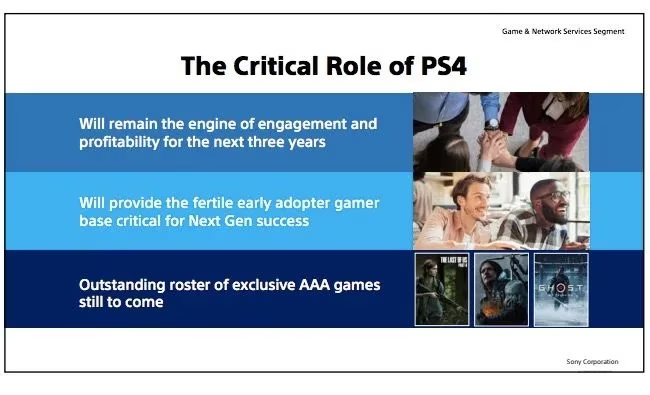
Seven years have passed since that moment, and with the PS5 now firmly in the second half of its lifecycle, it’s fascinating to look back at how that promise aged. All three games did, in fact, launch for the PS4 — none of them jumped ship to become PS5-only titles, contrary to many fears. Ghost of Tsushima arrived in summer 2020, a stunning swan song that pushed the base PS4 hardware to its absolute limits. I played it on a launch-model console and was blown away by the seamless open world and lightning-fast load times, which felt nearly magical given the aging hardware. Many players immediately upgraded to the PS4 Pro for that title, chasing the performance mode that boosted frame rates and gave the island of Tsushima an almost dreamlike fluidity.
Death Stranding, on the other hand, was the eccentric outlier we all expected from Hideo Kojima. It released in late 2019, just before the PS5 reveal, and it shattered storytelling conventions. I remember being completely lost — and completely captivated — while connecting a fractured America as Sam Porter Bridges. That game also became a fascinating benchmark for backward compatibility once the PS5 launched. Sony had demonstrated with a Spider-Man demo that PS4 titles could load up to fifteen times faster on the new solid-state drive, streaming open worlds without a single hitch. Death Stranding on PS5 felt like a different experience: the lengthy traversal sequences became almost instantaneous, and the isolated atmosphere grew even more hypnotic without loading screens breaking the immersion.
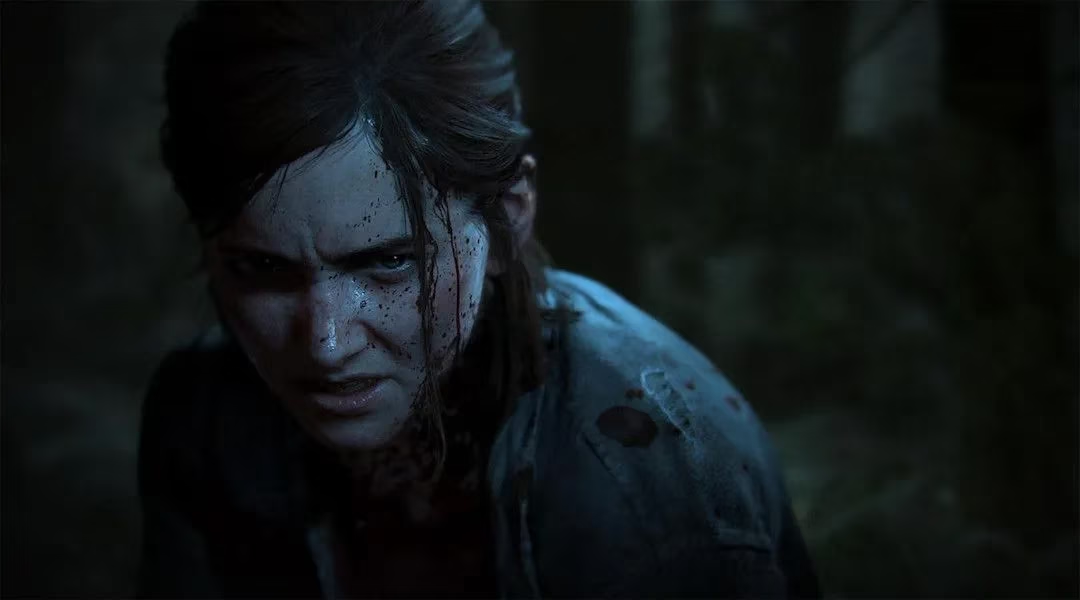
Then there is The Last of Us Part 2, a game I still think about weekly, even six years after its 2020 launch. Co-written by Naughty Dog’s Halley Gross alongside Neil Druckmann, the narrative took risks that sparked heated debates across every forum and tabletop gaming group. On the technical side, it turned out to be one of the most impressive showcases for cross-generation enhancement. When I installed it on my PS5 in early 2021, the game received an upgrade patch that offered a solid 60 frames-per-second performance mode while maintaining the rich, high-resolution textures. It felt like the definitive way to experience Ellie’s harrowing journey, and it proved how Sony’s commitment to PS4 didn’t penalize early adopters of the next console — instead, it gave us a taste of the future while respecting our existing libraries.
But the truth is, those three games were only the beginning of a much larger transition strategy. While Jim Ryan carefully named The Last of Us 2, Death Stranding, and Ghost of Tsushima in that 2019 report, the industry was already buzzing with rumors of Horizon Zero Dawn 2 and God of War 2. Both eventually materialized as Horizon Forbidden West and God of War Ragnarök, and — crucially — both launched as cross-generation titles. I had friends who stayed on PS4 for years longer than they planned simply because they could still play Aloy’s new adventure and Kratos’ next chapter without missing a beat. Sony’s approach wasn’t a clean break; it was a respectful bridge that acknowledged players invest emotionally and financially in a platform.
Looking back from 2026, I appreciate that strategy more than ever. Many of us have now fully migrated to the PS5, but our PS4 discs and digital libraries remain central. The backward compatibility that let old Ghost of Tsushima save files carry over, the free or low-cost upgrades that gave The Last of Us Part 2 a second wind, and the simple fact that no one had to abandon their backlog — these decisions made the generational leap feel less like a cliff and more like an escalator. The clock that began ticking back in 2019 never struck down those games; it just wound a new spring that still powers our modern sessions.
The lesson from that era is clear: trusting a platform holder’s word can be nerve-wracking, but when they deliver — and then go beyond with meaningful cross-gen support — the whole community wins. Today, as I pop in my old Death Stranding disc to show a friend what the fuss was about, the loading completes before I can finish explaining the chiral network, and I’m reminded that the best exclusives don’t fade when new hardware arrives. They just find a sharper, faster home.
Comments