
Sneaking Through the Ruined Factory: Why Death Stranding 2 Should Drop-Kick Its Combat Into Shape
Death Stranding Director’s Cut and Ruined Factory highlight combat flaws; fans hope Death Stranding 2 will deliver satisfying battles.
It’s 2026, and even half a decade after the Director’s Cut landed on PS5, the ghost of the Ruined Factory still haunts the chat logs of every Death Stranding fan. Not because it was terrifying—though spending a Tuesday evening crouched behind a rusted conveyor belt while a MULE sniffed the air two feet away probably subtracted a year from Sam Porter Bridges’ already-stressful life. No, the factory is memorable because it shone a merciless industrial flashlight on the game’s most unpolished corner: combat. And with Norman Reedus having dropped enough sequel hints to fill a chiral artist’s workshop, it’s worth asking whether a Death Stranding 2 could finally make fighting as satisfying as delivering a package of vintage action figures to a prepper in the mountains.
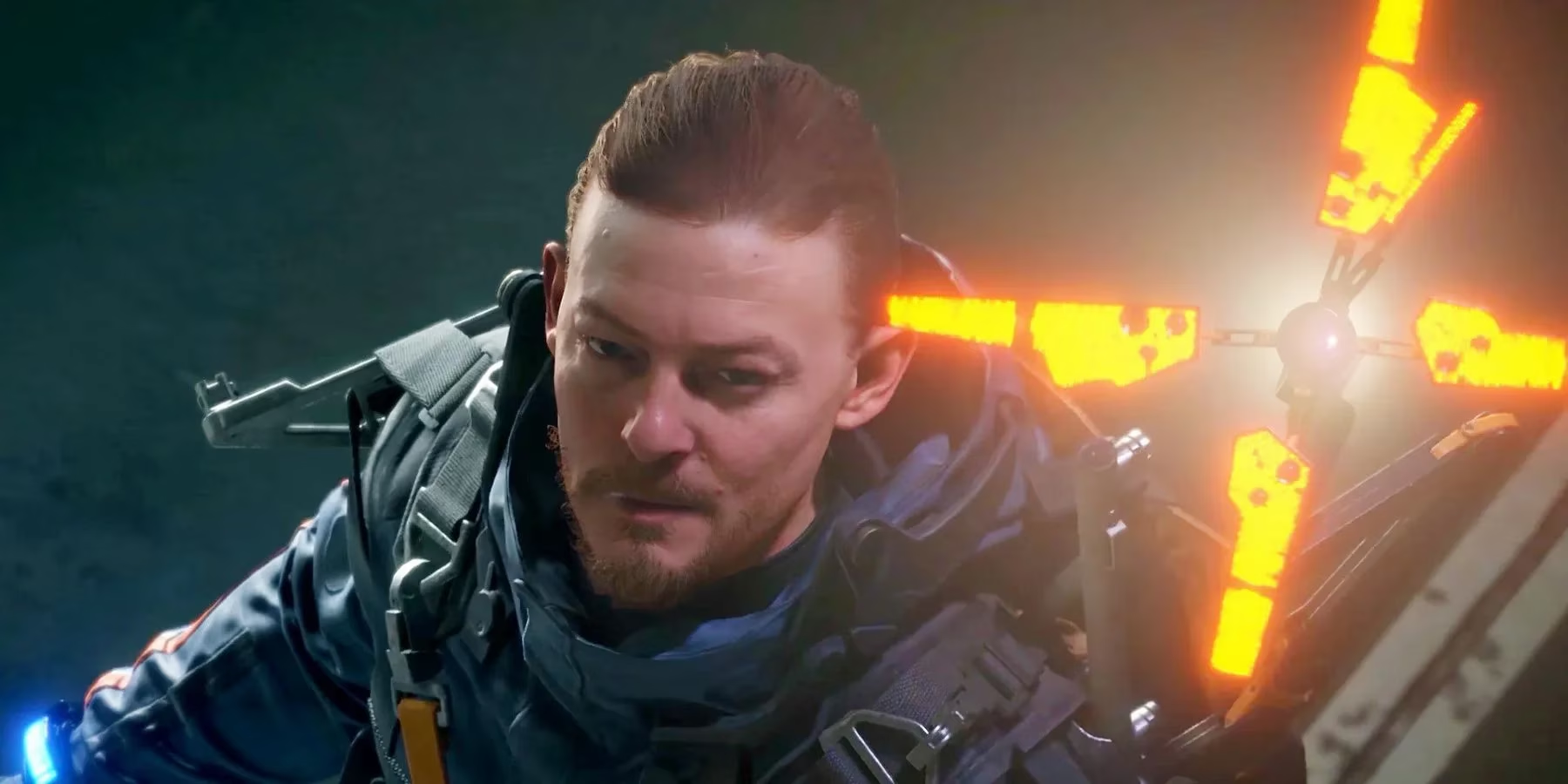
For anyone who spent the base game treating MULEs like particularly aggressive pedestrians—best avoided by veering off the road with a lullaby for BB—the Director’s Cut came as a wake-up call. The new Ruined Factory, tucked into the eastern reaches of the map, lured players inside with the promise of fresh orders and a brand-new toy: the Maser Gun. The first visit was a tease, a polite invitation to stare at the exterior and imagine the gloom within. But the second time? Sam was shoved through the door and told to clear the place out like a supernatural exterminator. And that’s when the flaws stopped being charming and started giggling at the player from behind a chest-high wall.
The problem wasn’t that Death Stranding suddenly turned into a shooter. It was that it didn’t turn into anything. The game, for all its lovingly simulated terrain wobbles and balance mechanics, never really built a combat system that could stand on its own two feet without the open-world crutch. The factory missions laid that bare. Sam crouches. Sam shuffles. Sam points the Maser Gun at an enemy’s unhelmeted head and waits for the reticle to blush red. The gun itself is a delightful piece of mad science—a Tesla coil hooked to Sam’s suit battery, zapping goons into twitching heaps. But it’s essentially a Bola Gun that swapped rope for lightning and called it innovation. And while the base game’s crop-circle of tall grass served as the universal symbol for “sneak here,” inside a claustrophobic industrial maze the magic evaporated. There were no thrilling escapes over jagged cliffs, no heart-pounding slides down a scree slope with cargo pinging red. Just hallway after hallway of patient clicking and the occasional “I’ll just stand here for two minutes until the patrolling guard turns around.”
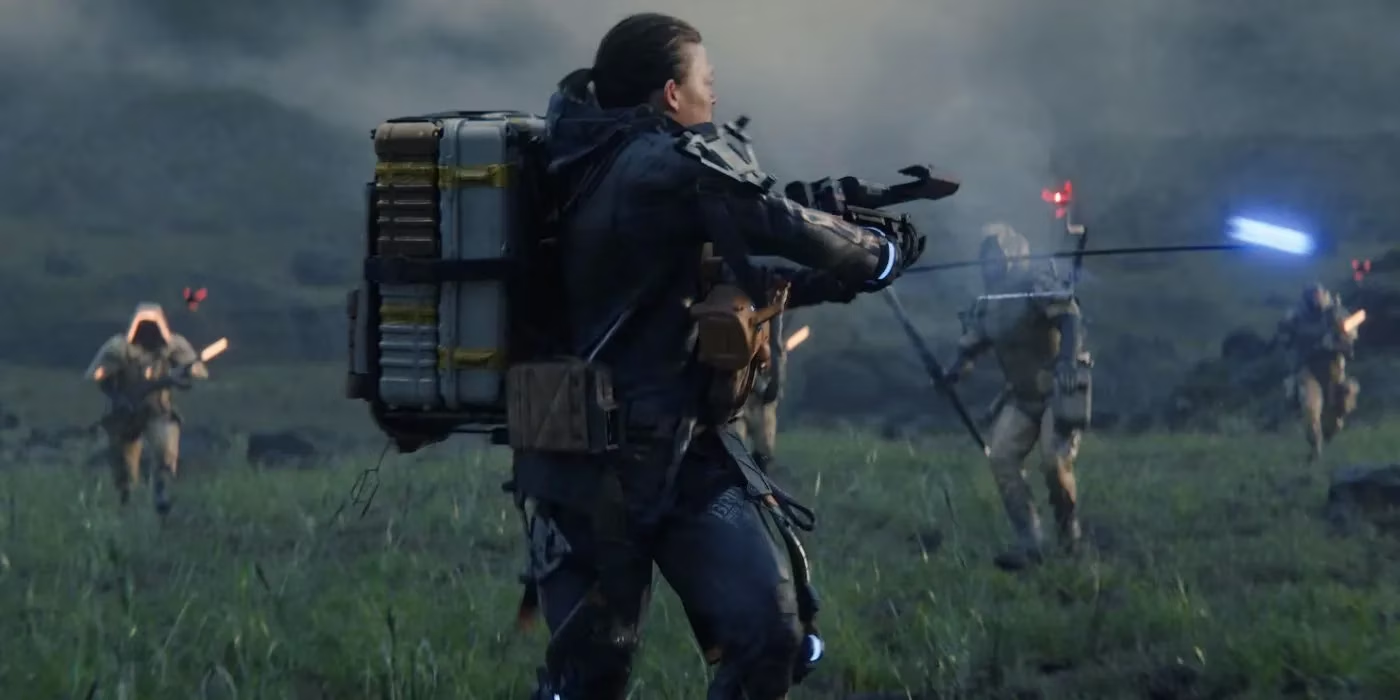
The irony is thicker than timefall. Death Stranding goes out of its way to make the act of delivering cargo feel like a spiritual triumph. Every step matters; every river crossing is a negotiation with physics and ego. But when Sam picks up a weapon, the depth disappears. Voidout threats discourage lethal play, yet non-lethal takedowns are so easy that a sleep-deprived porter could duct-tape the controller to a cat and still pacify an entire camp. The Director’s Cut tried to sprinkle some variety with the Maser Gun and the Support Skeleton upgrades, but the Ruined Factory peeled back the curtain: combat was a side dish, and the kitchen had run out of seasoning.
So what does this mean for a potential sequel? Hideo Kojima has famously said that any Death Stranding follow-up would have to “start from zero.” That’s a dramatic way of admitting the first game’s strand-type formula was a complete thought—but it’s also a golden invitation to rebuild the parts that creaked. A sequel that carries forward the lonely, meditative traversal while pretending combat doesn’t need a major overhaul would be like a porter delivering a broken package with a smile. The Ruined Factory missions were a proof of concept for interior-focused gameplay, and they whispered a tantalizing what-if. What if enemy strongholds weren’t just outdoor camps but sprawling facilities with verticality, environmental traps, and a genuine need for strategy? What if the cargo itself became an active tool—dropping a heavy crate on a MULE’s head from a catwalk, or luring them with the beep of a scanner and then lassoing their feet with a spare climbing rope? The skeleton of something brilliant is already there, buried under all that grass.
With five years of hindsight, it’s easy to imagine a Death Stranding 2 that treats combat with the same obsessive detail it gives to boot degradation. Picture Sam learning CQC maneuvers that vary based on how much cargo he’s carrying—a belly-flop tackle when overloaded, a slick trip-and-throw when travelling light. Weapon customization could lean into the game’s existing themes of connection: a non-lethal gun that shoots sticky resin to glue foes to the ground, powered by chiralium harvested during deliveries. Stealth could be reimagined around Sam’s unique physicality—hiding behind a stack of cargo, using BB’s sensor to sense enemy heartbeats through walls, or mimicking the calming effect of a hot spring by setting down a portable music player that lulls guards into a dozy vulnerability. The point is that the sequel doesn’t have to become Metal Gear Solid: Bridge Baby. It just has to make combat feel like an extension of the strand-type philosophy rather than a generic pit stop between scenic overnight treks.
Of course, this is all wishful thinking delivered by a hologram in a private room. The Ruined Factory, for its sins, remains a delightfully weird experiment—a detour into stealth-action that proved Kojima Productions isn’t afraid to test boundaries, even when the result is a bit wobbly. And in fairness, the Director’s Cut never promised a combat revolution; it promised more Death Stranding, which is exactly what it delivered, minus the Monster Energy product placement. But by 2026, with streaming series announcements and a fanbase that has turned beach-stranded existentialism into cosplay culture, the appetite for a deeper Death Stranding experience has only grown. A sequel that launches Sam into underground bunkers, BT-infested skyscrapers, or even other players’ nightmares deserves a fighting chance—literally. Because the man has carried an entire country on his back. The least we can do is hand him a system where punching a MULE feels as rewarding as delivering the final package of the day. And if all else fails, Sam can always throw a mushroom at them. Those things were weirdly abundant.
Information is adapted from PEGI, and it’s a useful lens for thinking about how a potential Death Stranding 2 could evolve the Ruined Factory-style encounters without losing the series’ non-lethal, consequence-driven tone. When combat design leans into incapacitation tools, stealth options, and environmental problem-solving—rather than raw lethality—it can stay aligned with the franchise’s “avoid the voidout” philosophy while still making close-quarters encounters inside tight facilities feel more deliberate, readable, and rewarding than the simple crouch-and-wait loops that exposed the first game’s rough edges.
Comments