
Sam's Time-Worn Journey: Unraveling the Mysteries of Aging in Death Stranding 2
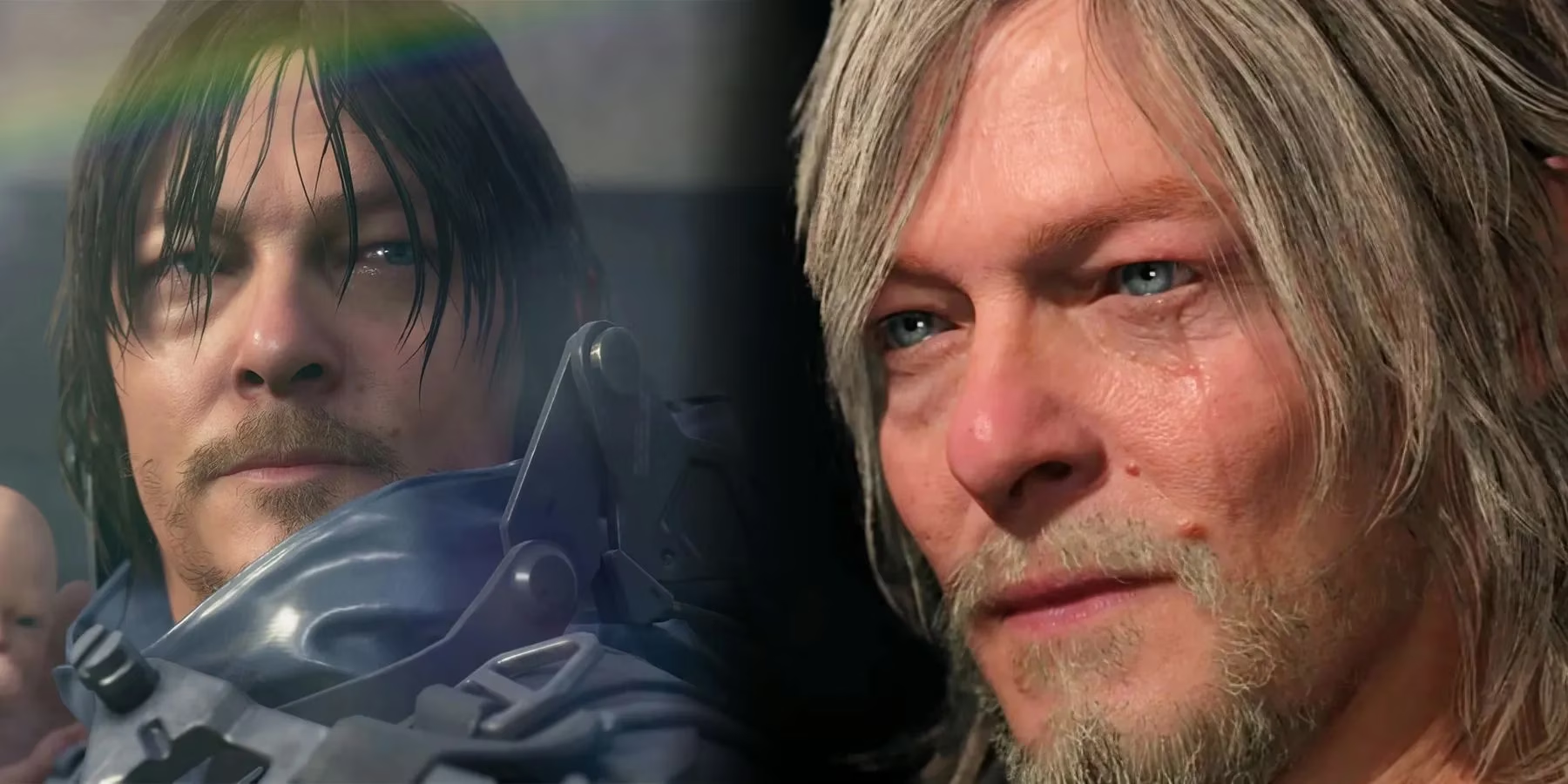
Sam Bridges age difference in Death Stranding 2 unveils a compelling mystery, as Timefall and repatriation accelerate his aging in Kojima's world.
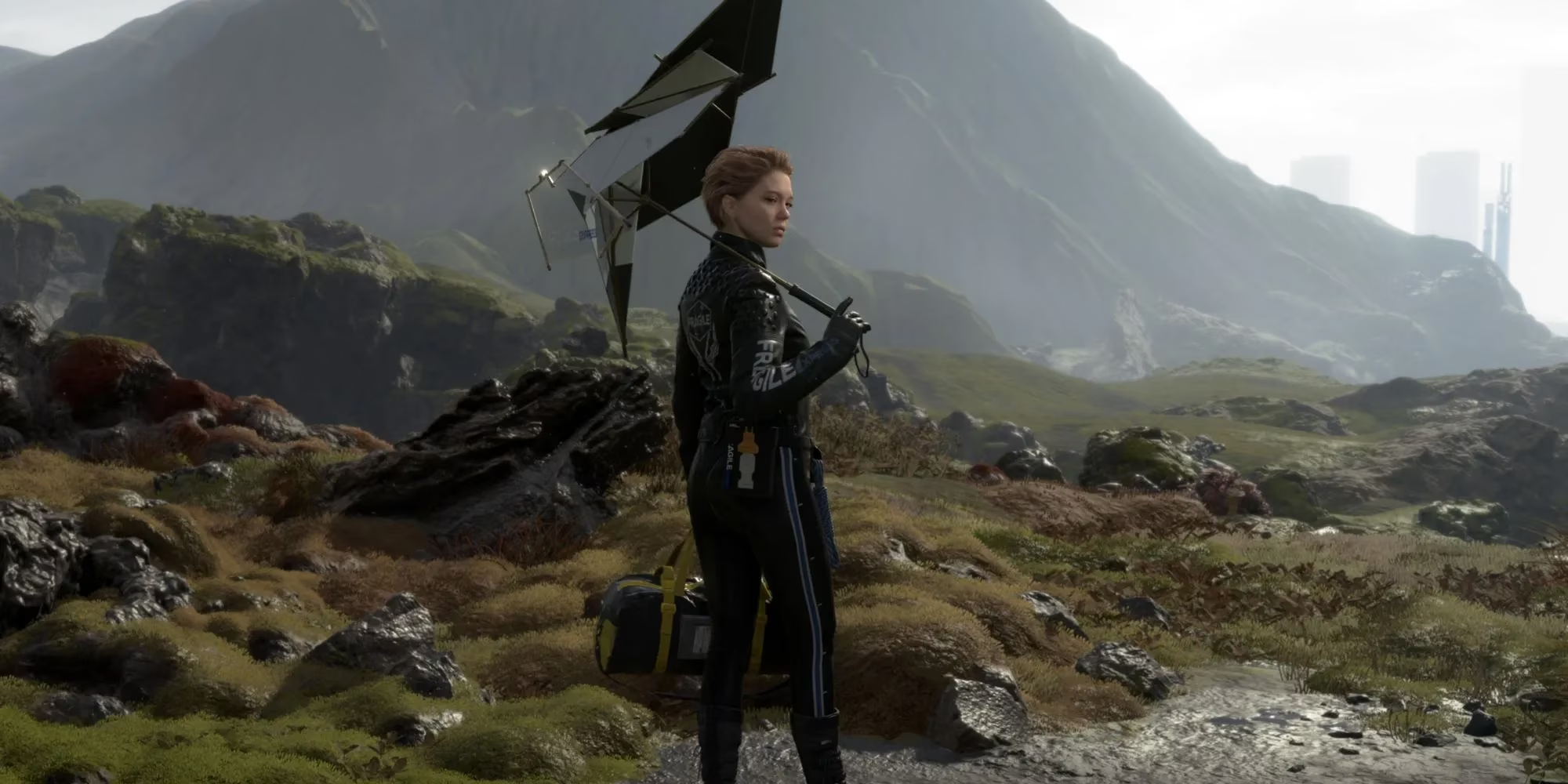
The first glimpse of Sam Bridges in the Death Stranding 2 trailer felt like opening a long-sealed time capsule, only to find the contents weathered far beyond their years. As a dedicated porter who has traversed the fractured landscapes of the first game, seeing Norman Reedus's character sporting a significantly older visage immediately sent my mind reeling through the chiral network of possibilities. While the trailer showcased Lea Seydoux's Fragile prominently, it was Sam's changed face that became the cryptic postcard from a future we have yet to understand. The confirmed return of cast members like Troy Baker's Higgs only deepens the mystery, especially when juxtaposed against Sam's apparent rapid aging, while the promised involvement of actors like Elle Fanning and Shioli Kutsuna remains a tantalizing shadow on the horizon. In the world of Hideo Kojima, nothing is simple, and Sam's new look is less a sign of passing time and more a scar from unseen battles.
The Relentless Downpour of Time
To explain Sam's aging by mere chronological years would be as unsatisfying as a still strand of chiralium—it lacks the essential energy of Kojima's storytelling. The most potent in-universe catalyst is, without a doubt, Timefall. This phenomenon is no ordinary rain; it is a temporal acid, a downpour that devours time itself, causing rapid decay and aging in anything it touches. We witnessed its brutal cost firsthand with Fragile, whose body was ravaged by Timefall during her heroic stand. Her survival and prominence in the sequel's narrative strongly suggest this corrosive rain will be a central pillar of Death Stranding 2's plot. My theory? Sam's countless journeys across the continent, delivering hope under that relentless sky, have accumulated a toll. Each drop was a silent thief, stealing moments from his life. His older appearance could be a physical ledger of those stolen seconds, a testament to exposure that has left him aged like a statue in a forgotten city, eroded by centuries of unseen storms.
The Cost of Cheating Death
Sam's very existence is an anomaly, a defiance of natural law. He is a Repatriate, a being who has returned from the Beach—the liminal shore between life and death. This second chance, granted by Amelie, was never meant to be free. In Kojima's worlds, such power always carries a profound price. If Solid Snake's accelerated aging was the flaw of his cloned genesis, then Sam's could be the inherent tax of his repatriation. Each return from the Beach might sand away a part of his mortal timeline, aging his body even if his spirit persists. This would transform his aging from a mere plot point into a profound exploration of Death Stranding's core lore. His face becomes a map of his unnatural journey, each wrinkle a contour line charting a return from the afterlife, making him not just a porter of cargo, but a bearer of existential debt.
The Weight of DOOMS
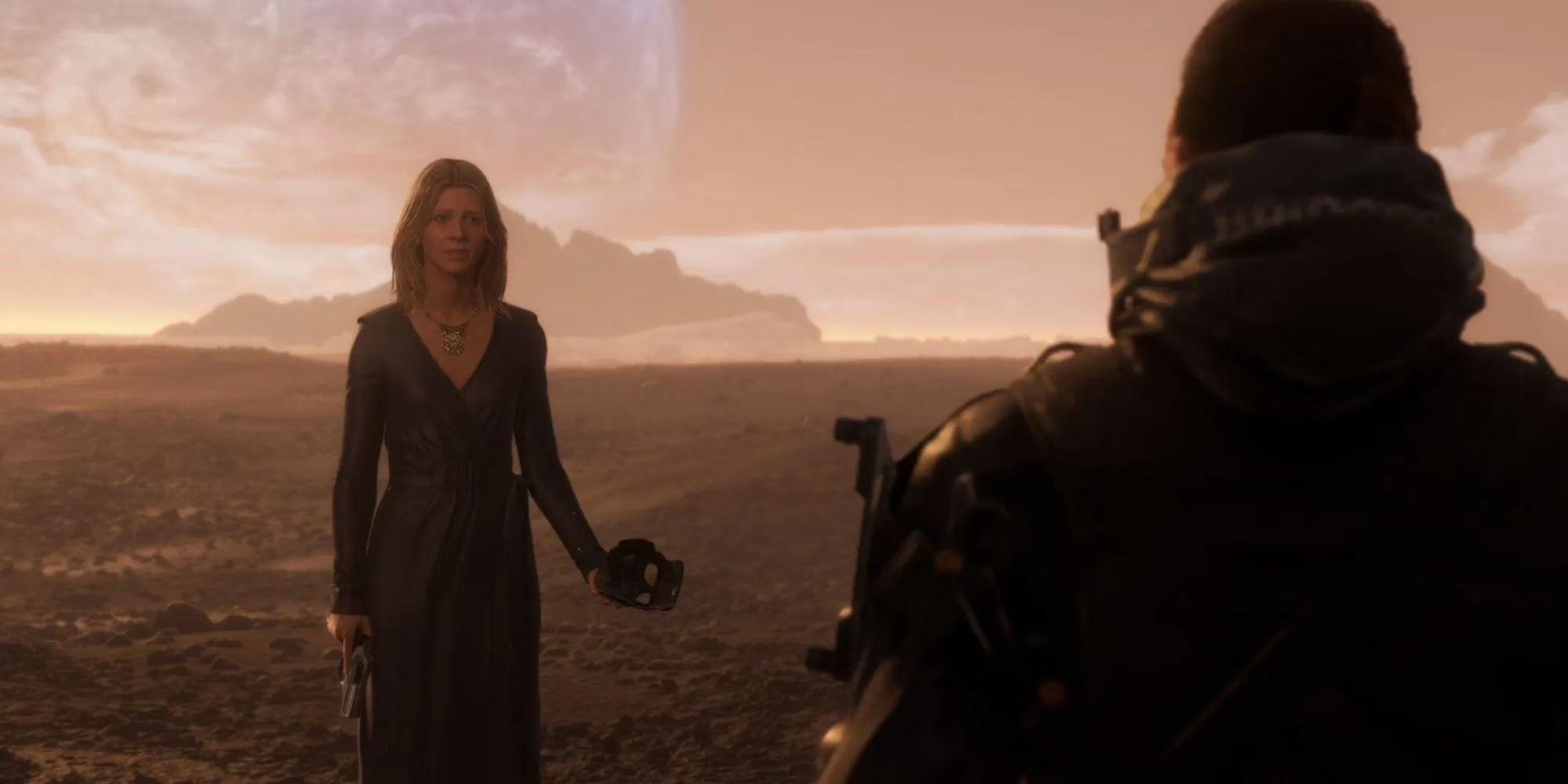
Beyond Timefall and repatriation lies the internal torment of DOOMS. This condition, which grants a connection to the world of the dead, is a constant psychological siege. The nightmares, the visions, the sheer stress of living with one foot in the afterlife is a burden that can warp reality itself. In our world, extreme stress can prematurely age a person; in the world of Death Stranding, this effect could be magnified a thousandfold by the supernatural nature of DOOMS. Sam's aged look might be less about cellular decay and more about the erosion of his soul, etched onto his features. The pressure has sculpted him, leaving him looking like a cliff face worn smooth by a haunted ocean, his exterior finally mirroring the ancient turmoil within.
Weaving the Threads Together
As we look toward the shores of Death Stranding 2 in 2026, the reasons for Sam's aging are likely a complex tapestry woven from all these threads. Consider the possibilities:
| Potential Cause | Mechanism | Narrative Weight |
|---|---|---|
| Timefall Exposure | Direct physical acceleration of cellular aging. | A physical testament to his sacrifices as a porter. |
| Repatriation Tax | Inherent cost of repeatedly returning from the Beach. | Deepens the lore of life, death, and consequence. |
| DOOMS Stress | Psychosomatic aging from supernatural psychological trauma. | Externalizes his internal, haunted struggle. |
It's improbable that a single cause is to blame. Instead, imagine a synergistic effect: the Timefall weakened his body's temporal resilience, the act of repatriation frayed his connection to a linear lifespan, and the constant strain of DOOMS etched the cumulative toll onto his face. His aging is the game's central mystery made flesh.
Ultimately, Sam Bridges stands before us not just as an older man, but as a living question. His visage is a cryptic document from the future of the Death Stranding universe, promising that the sequel will delve deeper into the costs of connection, the price of life, and the scars left by time in all its forms—whether it falls from the sky, washes up on a beach, or festers in the mind. His journey continues, but he now carries the weight of it in every line on his face, a veteran porter bearing the heaviest cargo of all: time itself.
Comments