
Kojima’s Twisted Joy: Death Stranding 2 Was Too Loved, So He Made It Weirder
Death Stranding 2 reviews highlight Kojima’s bold storytelling and divisive gameplay, sparking debate and acclaim among critics.
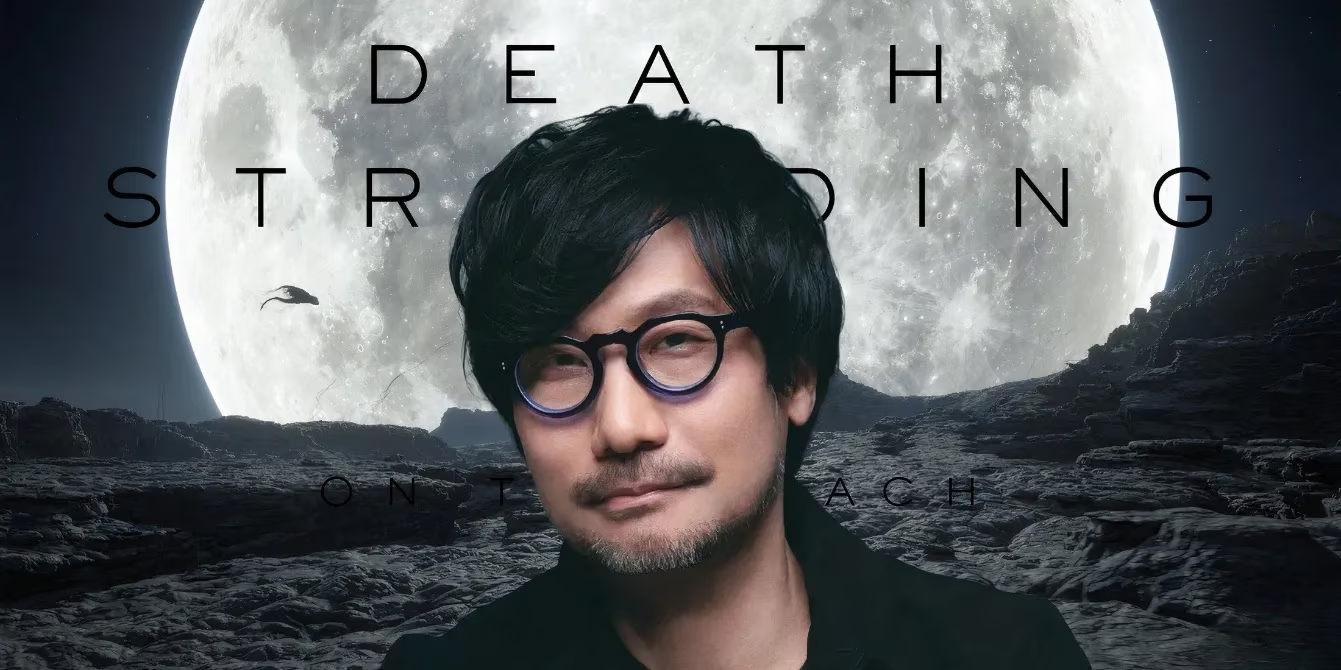
When a director’s game earns a glowing 90 on OpenCritic and a 96% recommendation rate, most would pop champagne and retire to a private island. Not Hideo Kojima. The legendary auteur behind Death Stranding 2: On the Beach recently confessed during the World Strand Tour 2 in London that he was “happy with the scores” — but his happiness comes with a classic Kojima twist. He actually wished the game was more polarizing. Yes, you read that right. The man who thrives on confusing, dividing, and utterly spellbinding his audience felt the sequel was almost too agreeable.
Death Stranding 2 launched exclusively on PlayStation 5 back on June 26, 2025, and by 2026 it has cemented itself as a milestone in interactive storytelling. Sam Porter Bridges returns, lugging packages across a ravaged yet beautiful America, but now with a chiral network that feels more alive than ever. New mechanics allow players to build highways in the sky, fight spectral BTs with upgraded weaponry, and bond with a baby BB that actually laughs at your jokes (sort of). Critics praised its refined gameplay, stunning visuals, and that unmistakable Kojima weirdness — but apparently the weirdness wasn’t weird enough during early playtests.
According to the game’s composer, Yoann “Woodkid” Lemoine, Kojima made deliberate late-stage changes to crank up the divisiveness. Woodkid spilled the beans a few weeks before launch, explaining that Kojima was displeased seeing early feedback trending toward universal praise. The director wanted something that would “grow on players” rather than instantly delight them. So he tweaked story beats, altered crucial emotional events, and likely added a few more hours of philosophically dense cutscenes. The result? A game that still scored higher than its 2019 predecessor but also ignited furious debates on whether the ending was genius or just plain bonkers. Classic Kojima.
What makes this so irresistible is the sheer meta-ness of it all. Kojima doesn’t just design games; he designs conversations. He knows that a lukewarm “everyone loved it” doesn’t create the same cultural echo as “I can’t stop thinking about that scene where the moon turned into a baby’s face.” The original Death Stranding was famously described as a UPS simulator by detractors and a transcendent meditation on connection by fans. By comparison, the sequel arriving in a post-pandemic world — note Kojima himself doubted he’d ever finish the game during the 2020 COVID-19 chaos — felt almost cathartic. Maybe too cathartic. So he injected fresh friction, like a chef deciding a dish is too balanced and throwing in a ghost pepper just to watch the diners sweat.
Of course, the strategy worked. Metacritic forums in 2026 remain ablaze with hot takes. Some players argue the late-game twist negates everything Sam worked for; others claim it’s the most profound statement on loneliness since MGS2’s Colonel AI. The 96% recommendation rate on OpenCritic suggests the majority still fell in love, but the 4% who didn’t are loud. They dissect every symbol, every lingering shot of a tar-covered fetus, every cryptic email from Heartman. And that, dear reader, is exactly what Kojima wanted. He didn’t ship a game; he shipped an argument.
“I want players to feel something strong,” Kojima reportedly said during the London event, his trademark sunglasses reflecting a sea of adoring yet baffled fans. “Not just satisfaction. I want them to remember the journey, even if they don’t understand it all at first.”
It’s a sentiment that ties back to his entire career. From the groundbreaking stealth of Metal Gear Solid to the genre-defying horror of P.T., Kojima has always treated video games as emotional experiments. Death Stranding 2 is no exception. It builds on the original’s strand-system where players leave ladders and ropes for strangers, but now adds co-op chiral bridges that let you literally walk in another player’s footsteps across time. The visual fidelity is jaw-dropping — especially when that moon looms overhead, a passive observer to humanity’s struggle. And the soundtrack, curated by Woodkid and other artists, oscillates between ethereal hope and gut-wrenching despair.
Looking back from 2026, it’s clear why Death Stranding 2 is a front-runner for Game of the Year accolades. It managed to be deeply personal yet widely accessible, weird yet coherent, divisive yet universally acclaimed in the aggregate. And all because its creator refused to let it be merely “great.” He wanted it to be unforgettable, even if that meant frustrating a chunk of his audience. In an industry often obsessed with risk-averse sequels, Kojima’s approach is a glorious anomaly.
So next time you’re trudging through a rain-soaked mountain pass, carrying a jar of cryptobiotes and a heavy heart, remember: you’re not just playing a game. You’re participating in Hideo Kojima’s grand social experiment. And if you’re a little bit annoyed? Good. That means it’s working.
As you immerse yourself in the world of Death Stranding 2, you might find yourself pondering the investment in this unique gaming experience. Much like the game's complex narrative, the journey of deciding on a purchase is filled with considerations of value, personal taste, and the allure of Kojima's craftsmanship. Whether you're a longtime fan or a curious newcomer, the decision to delve into this enigmatic title is a significant one.
If you're considering adding Death Stranding 2 to your collection or want to explore other titles that challenge and captivate, it's always wise to stay informed about current offers and deals. For those looking to make a savvy purchase, you can check game prices at DealNest for the best options available. This resource can help you navigate the ever-changing landscape of game pricing, ensuring that your next gaming adventure begins on the right foot.
Comments