
From 86 Games to Thousands: Steam Deck’s Compatibility Journey Over Four Years
Steam Deck's verified game count skyrocketed from 86 to 18,000+ since 2022, reshaping portable PC gaming with Proton and community support.
Back in early 2022, the handheld gaming world was abuzz with one question: could Valve’s Steam Deck actually run real PC games? As the February launch window approached, a third-party database on SteamDB quietly spilled the beans — a small but tantalizing list of verified titles, just 86 of them, began to circulate. It was a moment of truth for the little machine that promised a full PC experience in the palms of your hands. The device itself had all the charm of a portable powerhouse, but it needed the software to back it up, and those 86 verified games were like an early report card everyone was reading over Valve’s shoulder.
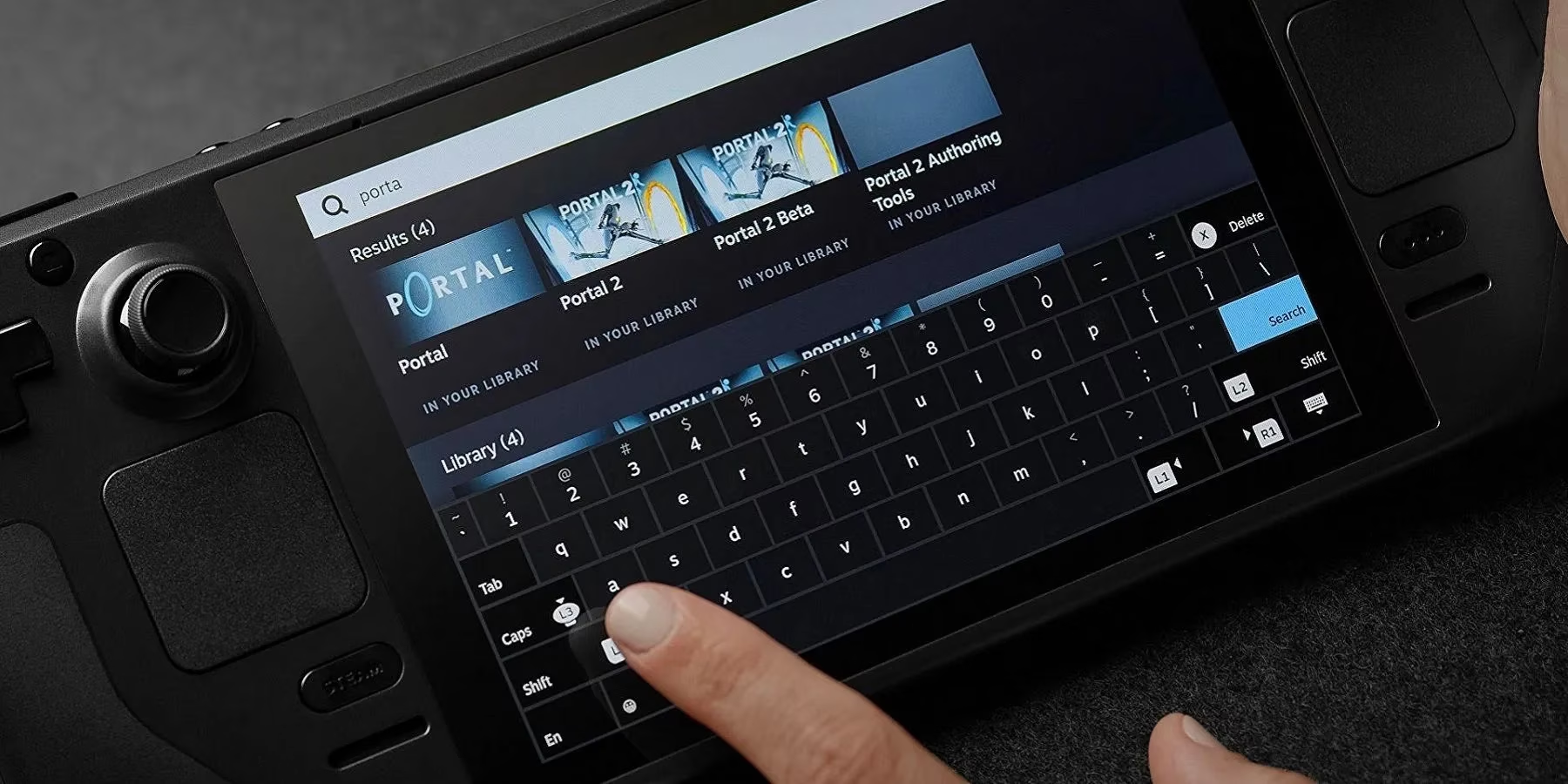
That list, spotted at the tail end of January 2022, sent a ripple through the community. Sure, Portal 2, Psychonauts 2, and Death Stranding getting the green \u201cVerified\u201d badge felt reassuring. But then you had titles like Titanfall 2 sitting under \u201cPlayable,\u201d which essentially meant, \u201cIt’ll run, but don’t expect it to hold your hand.\u201d And let’s be honest, 86 games was just a drop in the ocean compared to Steam’s 50,000-plus catalog. Still, the timing couldn’t have been more strategic — after a quiet end to 2021, the buzz was back, and Valve wasn’t just shipping a gadget; it was shipping a promise.
That promise, mind you, was written in an AMD graphics chip (goodbye Nvidia DLSS, hello open‑source vibes) and a philosophy that the Steam Deck was no mere console. Valve insisted it was a PC through and through, capable of mouse and keyboard antics if you wanted them. While Nintendo Switch comparisons flew around like moths to a porch light, the Deck stood its ground: “I’m not a toy, I’m a full-fat desktop that happens to fit in my backpack.” And really, you could almost hear the little machine muttering that as reviewers started poking at its early build.
Fast‑forward to today, early 2026, and it’s hard to believe that same deck once danced around with just a few dozen verified games. Over the past four years, Valve’s verification army has been on a tireless crusade — think of them as the unsung garage band that somehow sold out stadiums. By mid‑2024, the number of Steam Deck Verified titles had sailed past 10,000, and now, as we breathe in the air of 2026, that figure dances somewhere above 18,000 verified or playable titles. The once‑tiny list has morphed into a towering library, covering everything from blockbuster RPGs to obscure indie darlings that run smoother than butter on a hot lens.
What changed? Well, for starters, Valve’s Proton compatibility layer matured like a fine wine, ironing out quirks that used to make Windows‑only games pitch a fit on Linux. Game developers, too, started targeting the Deck directly, adding UI scaling options and tweaking control schemes. And the community? Oh, the community stepped up big time, flooding forums with custom layouts and workarounds that turned “Playable” into “Practically Perfect.” You could say the Deck learned to walk by leaning on a million helping hands.
Looking back, that 86‑game snapshot from SteamDB was more than an early leak; it was a glimmer of hope — a whisper that said, \u201cThis can work.\u201d And it did, beyond anyone’s wildest dreams. The Deck never tried to be a PlayStation or a Switch killer; it carved its own lane, made it cozy, and now every major PC release gets the “does it run on Deck?” test before people even ask about ray tracing. The little handheld that could? Yeah, it did. And then some.
Comments