
Death Stranding 2: The Evolution of Boss Battles and Kojima's Signature Weirdness
Hideo Kojima's visionary Death Stranding 2 must masterfully evolve its iconic boss fights, like the unforgettable three-stage showdown with the enigmatic Higgs. This unforgettable battle brilliantly subverts expectations through inventive mechanics and genre-bending homage, creating a uniquely cathartic and memorable finale.
Hideo Kojima's Death Stranding franchise has always operated in a league of its own, a realm where 'strange' doesn't even begin to cover it. Since the first game's release, it has defied conventional genre labels, weaving a complex narrative delivered through lengthy cutscenes, cryptic dialogue, and environmental storytelling that left even dedicated players with unanswered questions. This very ambiguity and the sheer, unbridled creative freedom Kojima Productions enjoys post-Konami have become the series' hallmark, cultivating a deeply dedicated fanbase. From the asynchronous online world of shared structures to the intimate, bizarre moments in Sam Bridges's private room, the games are a masterclass in surprise. As development for Death Stranding 2 continues into 2026, one element from the original that demands an equally inventive evolution is the boss fight, particularly the unforgettable three-stage confrontation with the enigmatic Higgs.
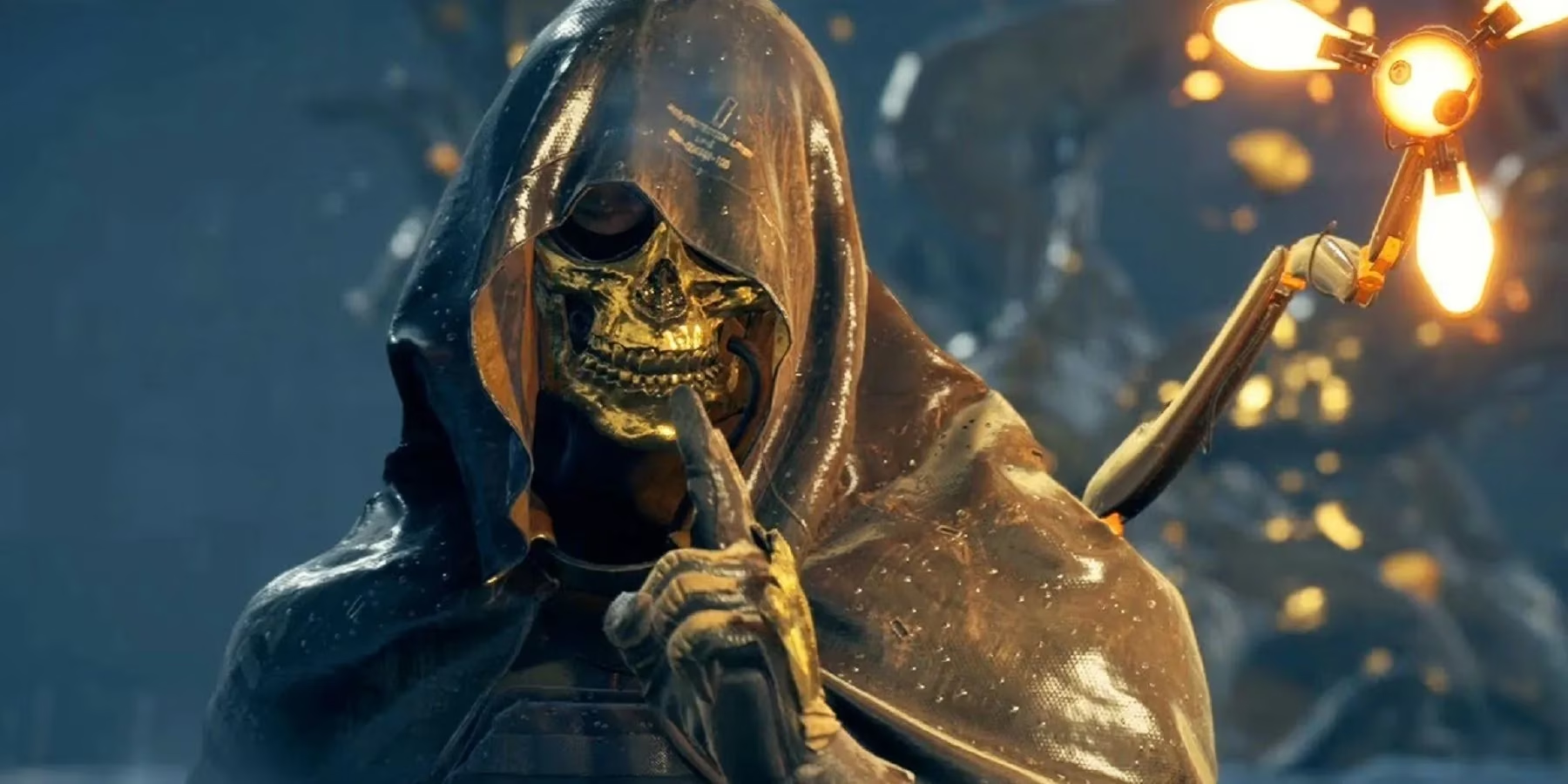
The final showdown with Higgs in the first Death Stranding was, in true Kojima fashion, anything but a conventional shootout. After Sam's arduous journey to reconnect the United Cities of America and battling colossal BTs, players finally face the primary antagonist on a Beach, ready for vengeance. However, the game subverts expectations immediately by stripping Sam of his arsenal, leaving only the versatile Strand rope. This setup forces players to engage with the game's mechanics in entirely new ways, making the fight a memorable capstone rather than a simple test of firepower.
The battle unfolds in three distinct acts, each a loving homage to different gameplay styles:
-
Stage 1: The Stealth Homage - This phase is a clear nod to Kojima's Metal Gear Solid roots. The arena is littered with scattered cargo, which players must throw to distract Higgs. The goal is to sneak up and bind him with the Strand rope, followed by a few satisfying kicks before he breaks free. It's a tense game of cat-and-mouse that feels completely different from the game's core delivery gameplay.
-
Stage 2: The CQC Duel - Shifting gears, the second stage focuses on close-quarters combat. Armed again with just the Strand, Sam must parry Higgs's new knife attacks. Thanks to forgiving timing and a slow-motion assist, this section feels more like a cinematic brawl, emphasizing skill and reaction over brute force.
-
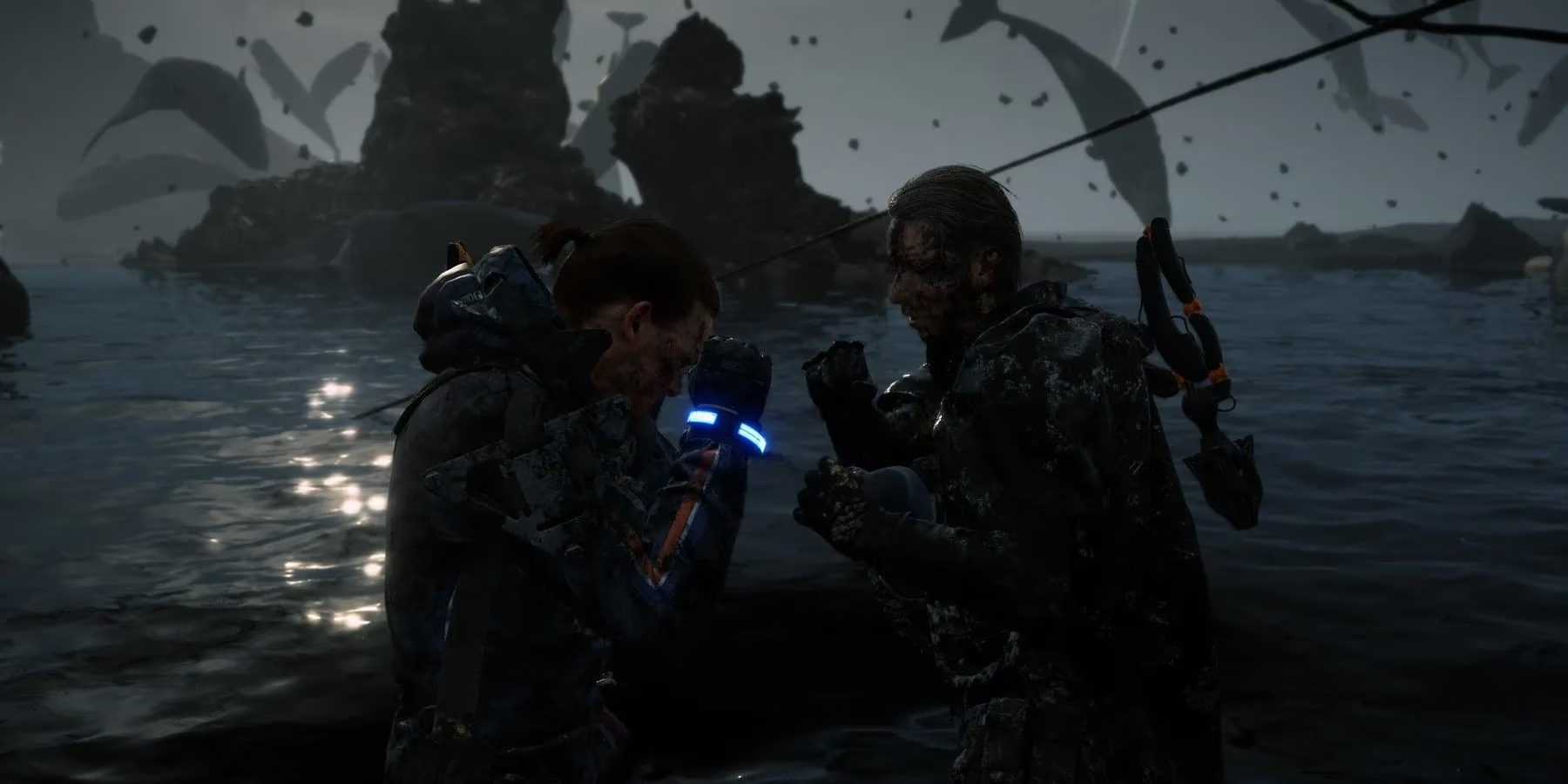
Stage 3: The 2D Fighting Game Twist - The finale is where Kojima's genius for the unexpected truly shines. The perspective shifts to a 2D plane, complete with life bars and move sets for both Sam and Higgs. While not as complex as Tekken or Street Fighter, it incorporates genre staples like blocking and combos. The camera zooms in on their battered faces, making every punch feel visceral and cathartic. Beating Higgs not once, but three times, across three different genres, delivers a payoff that's uniquely satisfying.
With Higgs confirmed to return in Death Stranding 2, the sequel has a golden opportunity to double down on this creative approach to boss design. The first game's three-stage fight proved that within Death Stranding's vast, lonely world, there is room for wildly inventive set pieces that break the fourth wall and player expectations simultaneously. The potential for the sequel is, as they say, off the charts.
Here are a few ways Death Stranding 2 could evolve the boss battle concept:
| Inspiration | Potential DS2 Implementation | The 'Kojima' Factor |
|---|---|---|
| Nier: Automata's bullet-hell segments | A battle transitioning into a surreal top-down shooter against a psychic BT manifestation. | Blending existential narrative with frantic gameplay in a way that's totally bonkers yet meaningful. |
| Metal Gear Solid 3's Guy Savage Easter Egg | A hidden, fully-realized horror-game sequence within a boss fight triggered by specific player actions. | A deep-cut reference that rewards obsessive players and becomes an instant legend. |
| The game's own delivery mechanics | A boss that must be defeated not by attacking, but by strategically building structures or managing cargo under duress. | Turning the core gameplay loop into a high-stakes puzzle battle is a total mind-bender. |
The beauty of Kojima Productions' approach is that they've built a world where literally anything is possible. The strangeness isn't just for show; it's the entire point. Players have come to expect the unexpected, and the Higgs fight in the original game set a high bar for creative execution. For Death Stranding 2 to truly wow players again, it needs to deliver moments that make them say, 'Whoa, I can't believe they just did that.' It's about that 'holy cow' factor that defines the best of Kojima's work.
As of 2026, details on Death Stranding 2 remain shrouded in the same tantalizing mystery that preceded the first game. One thing is for certain: if Hideo Kojima has his way—and he undoubtedly will—the sequel will continue to subvert, surprise, and challenge what players think a video game can be. The boss fights will be a major canvas for this philosophy. Whether facing Higgs again or new antagonists, these encounters have the potential to be more than just combat challenges; they can be narrative climaxes, genre-bending experiments, and unforgettable pieces of interactive art. The stage is set for another delivery of the wonderfully weird, and the gaming world is eagerly awaiting the package.
Comments