
Death Stranding 2's Neil Vana Storyline: Unnecessary, Retcon-Heavy, and Weaker Than Cliff Unger
Death Stranding 2: On the Beach's Neil Vana arc is unnecessary—a weak Cliff Unger retread that hurts the sequel.
In 2026, Death Stranding 2: On the Beach remains one of the most debated PlayStation 5 releases in Hideo Kojima's filmography. While the sequel has earned praise for its expanded combat, bizarre set pieces, and emotional moments, a detailed critique published by Siliconera argues that one major addition, the Neil Vana character and storyline, is completely unnecessary. According to the analysis, the narrative would have been much stronger if Kojima Productions had not wedged Neil Vana into the game simply to recreate the Cliff Unger-style boss fights and mystery segments from the original Death Stranding.
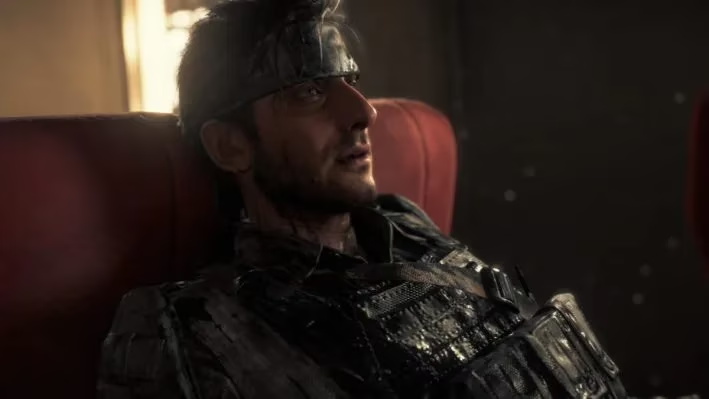
🎮 A Familiar but Weaker Echo of Cliff Unger
The original Death Stranding used Cliff Unger, a former Army Special Forces captain, as both a gameplay and narrative shock. His warzone boss fights were gritty, dark, and steeped in mystery. They tied directly into Sam's past, explained why Sam is a repatriate capable of returning from the Beach, and revealed the truth about the Bridge Baby program. Cliff was Sam's father, a man who tried to save his son from becoming a BB. Die-Hardman attempted to help but failed under Bridget Strand's orders. Sam was killed in the ensuing altercation, then revived by Amelie and given repatriate abilities. Bridget adopted him. Every one of those reveals had weight.
In Death Stranding 2, Neil Vana is meant to provide a similar jolt. But the critique argues that the similarities only highlight the weaknesses. Both characters come with ghostly soldiers, shadowy boss encounters, vague vignettes that only make sense later, and a BB connection. In Neil's case, the tie is Lou's pod. The problem is that repetition without fresh purpose feels like a retread. Where Cliff Unger's segments diversified a game that avoided combat, Neil Vana's segments arrive in a sequel that already leans heavily into combat. Sam receives a wide array of weapons and is encouraged to use them against armed survivalist humans, BTs, and ghost mechs. Corpses and Voidouts do not become a concern until the post-game, and only if the player enables that option. The original tension of avoiding altercations is largely gone.
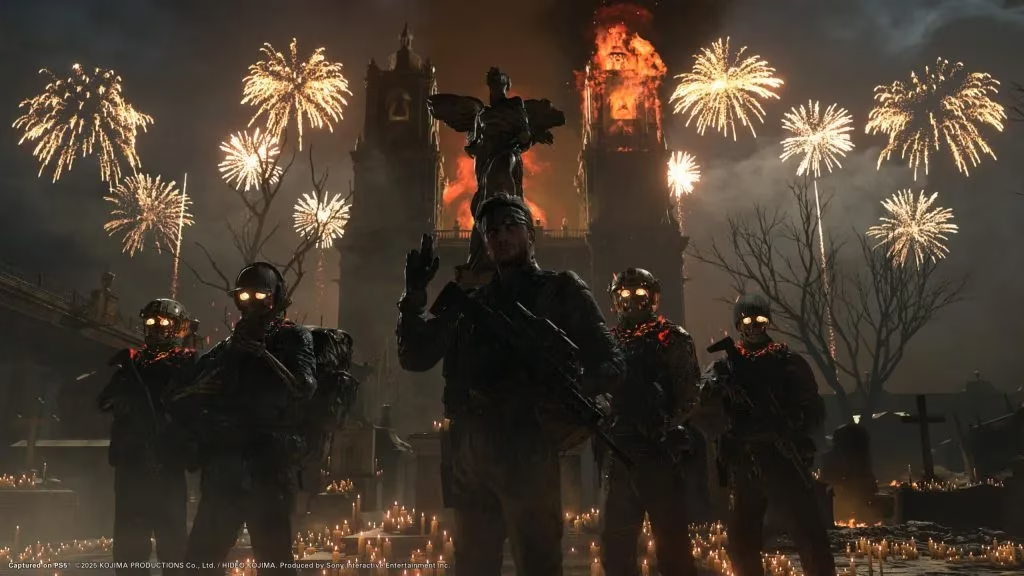
🧩 Gameplay Redundancy in a More Combat-Focused Sequel
From a gameplay perspective, the Neil Vana boss fights are not just familiar; they are redundant. Death Stranding 2 already offers otherworldly experiences through the DHV Magellan riding tar currents and Sam passing through Plate Gates. The Beach is no longer a rare, unsettling destination. It is part of the sequel's regular vocabulary. So why force another Cliff Unger-like antagonist into the story? The critique asks whether Kojima Productions felt obligated to include a warzone ghost boss simply because the first game had one, rather than because the narrative needed it.
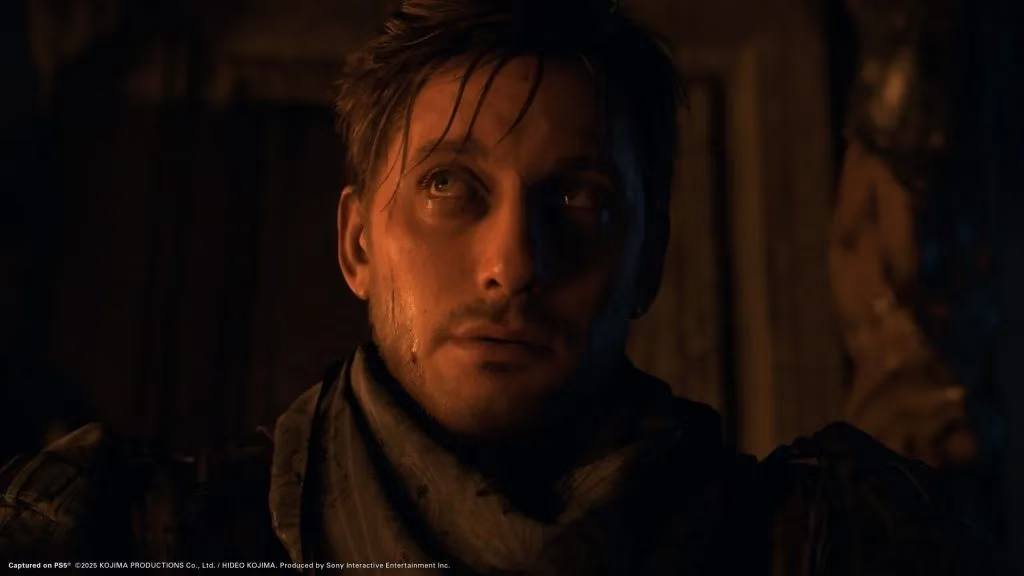
⚠️ Retconning Lucy Strand and Sam's Past
The more serious concern is how the Neil Vana storyline rewrites established facts. The critique states that the Neil nightmare segments, including one where Lucy Strand tells Neil that the child she carries is his baby, made the reviewer stop playing and double-check notes from a Death Stranding replay. This was not a minor visual retcon, like a photograph being updated to match a character redesign. It changed Sam's emotional history. In the original game, Sam loved Lucy and was heartbroken over her suicide and the voidout that followed when her body was not recovered. In Death Stranding 2, Sam suddenly speaks of Lucy as only his therapist, not his partner. If Sam now feels betrayal and hostility, why did he keep their photograph with his mother Bridget?
According to the critique, Lucy allegedly told Bridget about her dreams of the Beach while pregnant. But if Lucy was speaking with Neil at that time, she would have known about Bridges' BB plans, the sacrificial BB project, and Neil's involvement in transporting Stillmothers over the border. The game even confirms that Lucy had been collecting evidence of wrongdoing. So why would she confide in Bridget and have that conversation chronicled in the original game? The contradiction undermines the lore rather than deepening it.
Worse, the Neil Vana storyline rewrites the events that turned Sam into an outcast. The first game established that Lucy's death and voidout caused his isolation. Death Stranding 2 instead suggests that Neil Vana's actions led to the voidout at UCA-01-0C. It also implies that Sam made it to Lucy's side before the disaster, another change that conflicts with the original. The result is a storyline that feels less like a revelation and more like a patch job.
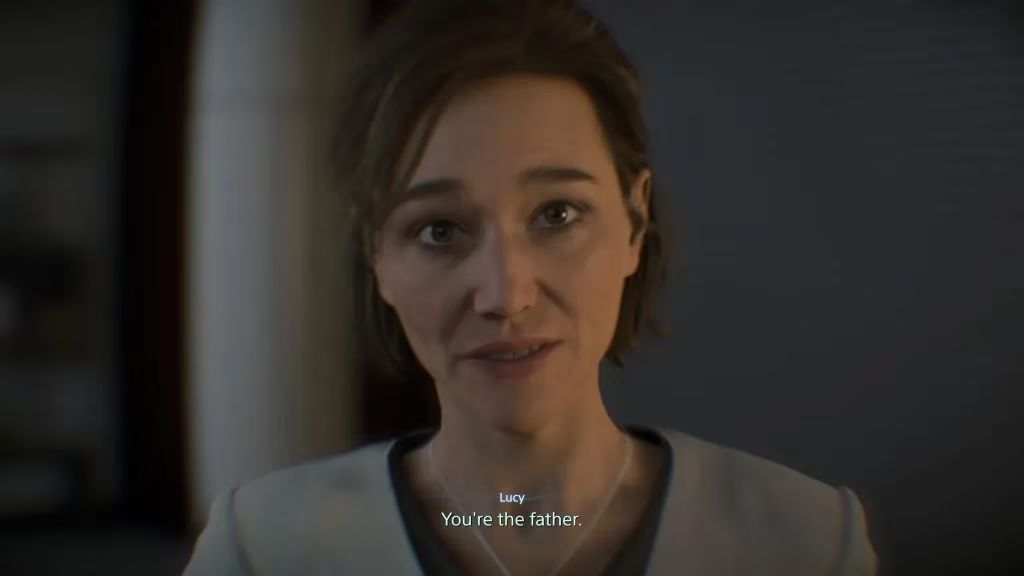
🤝 A Stronger Path Through Drawbridge
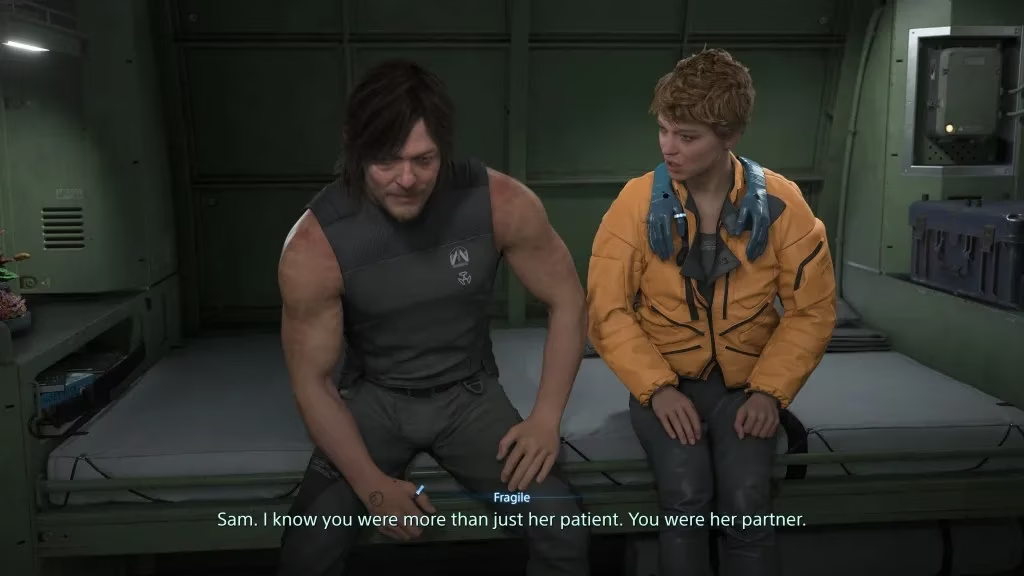
The critique argues that Death Stranding 2 already has better ways to explore Lou's past and Sam's grief. Once Sam and the crew at Drawbridge begin investigating, characters such as Fragile, Heartman, Deadman, and The Motherhood's Doctor provide just as much valuable insight. Instead of forcing in another antagonist to mirror Cliff Unger, Kojima Productions could have leaned harder into Sam connecting with and relying on his friends and allies. That approach would have fit the series' themes of connection and community. Why introduce a ghostly soldier and a rewritten love triangle when the emotional answers are already sitting around the campfire?
📊 Comparison: Cliff Unger vs. Neil Vana
| Aspect | Cliff Unger in Death Stranding | Neil Vana in Death Stranding 2 |
|---|---|---|
| Narrative purpose | Reveals Sam's origin, BB program, repatriate abilities, father-son link | Attempts to tie Lou to Sam via Lucy, but retcons existing lore |
| Gameplay context | Unique warzone boss fights in a game that de-emphasized combat | Redundant in a sequel already built around combat, weapons, ghost mechs |
| Emotional impact | Strong, mysterious, tied to Sam's past | Diminished by repetition, vague scenes, forced connection |
| Lore consistency | Establishes and enriches original facts | Conflicts with Lucy's death, voidout, Sam's grief, Bridget records |
🎯 Conclusion
Death Stranding 2: On the Beach is available on the PlayStation 5. In 2026, the debate over its story continues. For some players, Neil Vana represents the sequel at its most forced: a character designed to recreate a beloved beat without earning the same impact. The critique concludes that Hideo Kojima likely wanted to tie Sam and Lou closer together by making Lou his daughter with Lucy and by echoing Cliff Unger's tragedy. The intention may have been to create symmetry, but the execution undoes character development and lore from the first game. The Neil Vana segments did not land with the same power as the Cliff and Sam reveals. They are disappointing, and the story would have been stronger without them.
Comments