
Death Stranding 2 Must Rebalance Its Overpowered Truck to Restore Core Gameplay
Death Stranding 2 must urgently address the overpowered Truck's dominance, which trivialized the original's intricate traversal mechanics. A balanced arsenal of vehicles is crucial for engaging strategic gameplay.
As anticipation builds for the summer 2025 release of Death Stranding 2: On the Beach, a critical examination of its predecessor's most dominant mechanic reveals a fundamental flaw. The original Death Stranding offered a unique and often meditative delivery experience, praised for its haunting atmosphere and innovative social strand system. However, for players who delved deep into its systems, a single element eventually overshadowed the entire journey: the Truck. Once unlocked, this vehicle didn't just become a tool; it became the solution, transforming a nuanced traversal simulator into a lopsided trucking game and undermining the very mechanics that made the experience special.
The overwhelming dominance of the Truck, particularly the Long Range Lv. 3 variant, is the game's central balance issue. It functions as a "one-size-fits-all" vehicle that trivializes the core gameplay loop. Its enormous battery life and colossal cargo capacity make it the only practical choice for high-volume premium deliveries, which can demand over 1,000kg of materials. More critically, its off-road capability is absurdly generous. 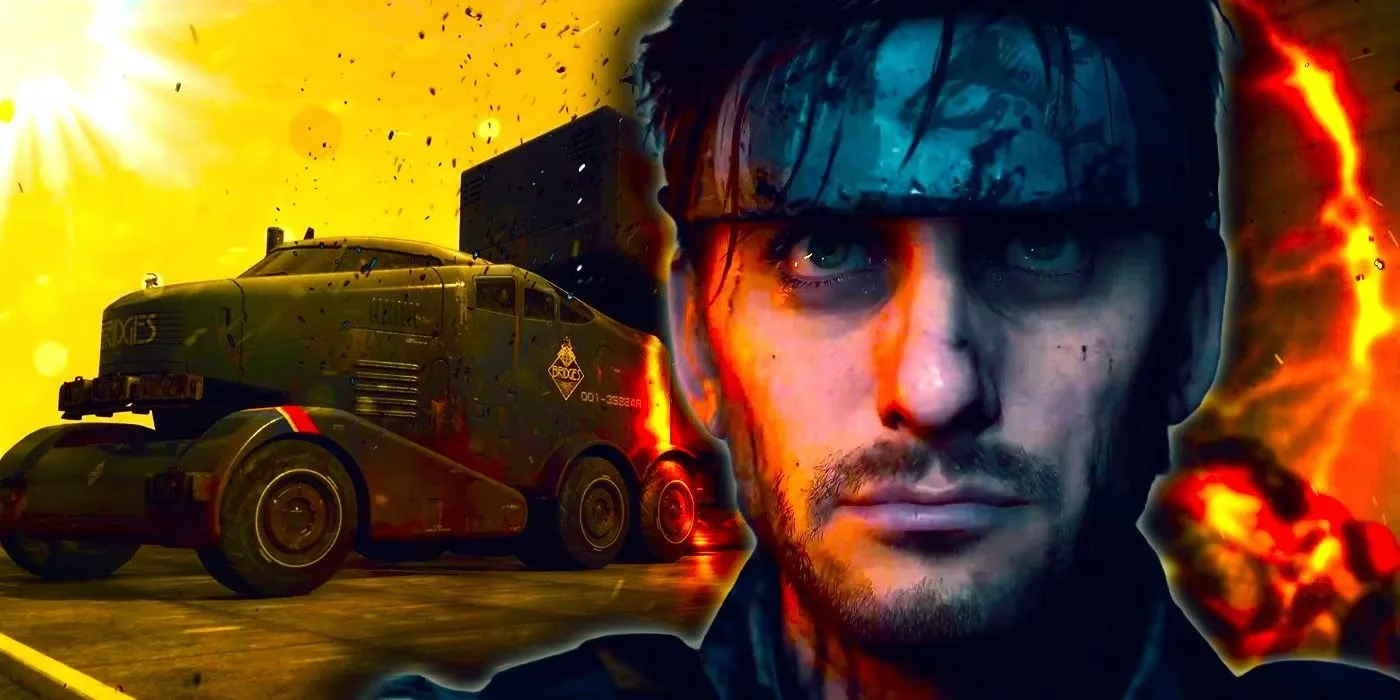
While one might assume the treacherous, snow-capped mountains are a Truck-free zone, determined drivers can, with persistence and liberal use of the save-anywhere function, coax these behemoths up nearly any slope. This capability neuters the purpose of countless other systems Hideo Kojima and his team meticulously designed.
-
😔 Obsoleted Gear: Why meticulously manage a complex network of ladders, climbing anchors, and power skeletons when a Truck can brute-force its way up a cliff?
-
🧗♂️ Neglected Terrain: The careful planning required to navigate rocky outcrops or cross rivers on foot becomes irrelevant.
-
⚡ Simplified Logistics: The strategic placement of postboxes and safe houses for storage and battery charging is often bypassed.
The game's own infrastructure projects, like building roads, ironically serve only to make the already-overpowered Truck even more efficient, rather than creating meaningful trade-offs between different modes of transport. The player is incentivized to find the quickest route from A to B, not the most engaging one.
This design flaw points to a missed opportunity for strategic variety. A truly balanced sequel should learn from other genre masters. Consider the evolution of Ninja Gaiden. The first game was criticized because the Dragon Sword was so superior it rendered most of the arsenal obsolete. For Ninja Gaiden 2, Team Ninja meticulously crafted what many consider one of the best weapon arsenals in action game history, where each tool had a distinct purpose and felt viable. Death Stranding 2 needs a similar philosophy applied to its traversal options.
How Death Stranding 2 Can Fix the Vehicle Problem:
| Vehicle/Tool | Current Role in DS1 | Proposed Role in DS2 |
|---|---|---|
| Long-Range Truck | Universal solution for all terrains and cargo. | Specialized for flatlands, roads, and mega-cargo only. Severely hindered by deep snow, steep slopes, and dense rock formations. |
| Reverse Trike & Bikes | Early-game toys, quickly outclassed. | Agile options for paved paths and light cargo, ideal for time-sensitive deliveries where roads exist. |
| Floating Carriers | Useful for foot-based bulk hauling before getting a Truck. | Become essential partners for mountainous or BT-heavy regions where large vehicles cannot go, requiring strategic multi-trip planning. |
| Exoskeletons | Largely optional outside specific heavy cargo missions. | Critical for navigating "Truck-proof" zones, offering unique shortcuts and access that vehicles cannot match. |
The game's permissive save system exacerbates the problem. Players can save-scum their way through any risky Truck maneuver, removing all consequence. Adopting a mission-based autosave system, similar to Metal Gear Solid V, or even limiting saves in hostile territory, would reintroduce tension and make the choice of vehicle and route a meaningful risk-reward calculation.
Ultimately, rebalancing the Truck isn't about making Death Stranding 2 more frustrating; it's about making it more diverse, strategic, and respectful of its own mechanics. The joy of the original wasn't just in the destination, but in the fraught, personalized journey. When a single vehicle can bulldoze through every environmental puzzle, that journey loses its soul. For Death Stranding 2: On the Beach to forge its own legendary path and not just retread old asphalt, it must ensure that every tool in Sam's arsenal—from his own two feet to the mightiest vehicle—has a vital role to play in reconnecting a broken world. The sequel's promise lies not in more power, but in more meaningful choices.
Comments